
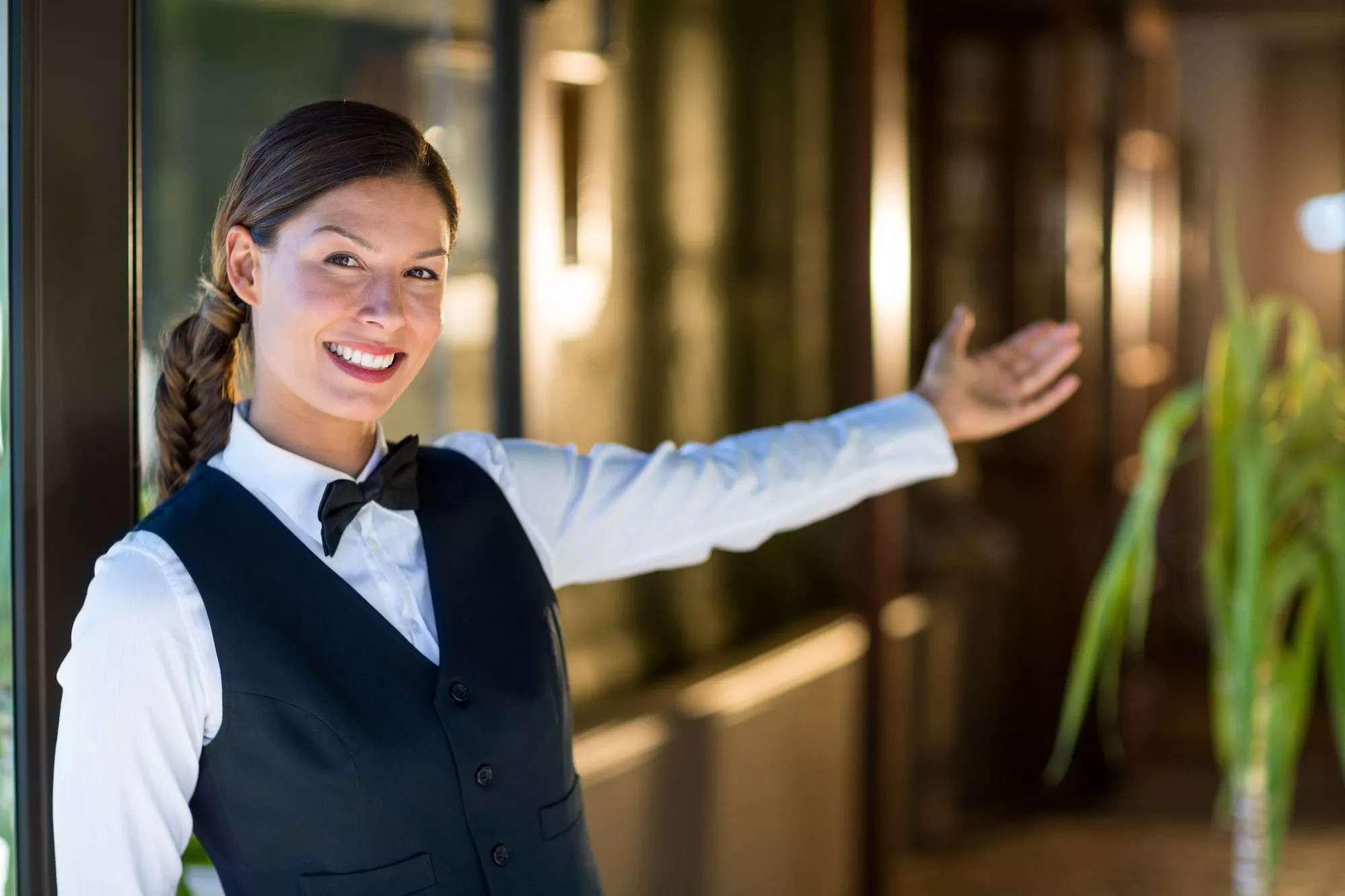
When a guest enters our hotel, their first encounter begins not with words but with looks, a smile, and posture. Our receptionist’s eyebrows rising, the barista’s slight head movement, the openness of the housekeeping staff’s body language—all of these determine whether the guest feels comfortable or uneasy. Yet this silent language is often overlooked in formal trainings.
In the hospitality profession, customer satisfaction is directly proportional not just to the quality of the service but also to the attitude we show while providing that service. This is where nonverbal communication comes in. Expressions and gestures convey a message much faster and often more sincerely than words. Understanding this and using it correctly truly professionalizes hotel teams.
Why Is Nonverbal Communication So Critical?
Research shows that 55% of communication consists of body language, 38% of tone of voice, and only 7% of words. In the hotel sector this ratio is even more pronounced, because guests often understand how they’re being looked at from the staff’s attitude rather than verbal instructions. A tired face, a monotone look, fast and practical gestures—these make them feel “you’re not cared about.” The opposite is equally effective: a warm smile, slightly tilting the head during active listening, a heartfelt look make the guest feel valued.
Especially in the hotel sector, as much as responding to the guest’s need, showing empathy toward them and their emotions matters too. Nonverbal communication conveys exactly this empathy. When a guest sits down at the desk as a complainer, even if you don’t agree with what they say, with your open body language, eye contact, and nodding, you tell them “I hear you.” This extinguishes most conflicts before they begin.
The Power and Flexibility of the Smile
The smile is the simplest but most effective tool of the hospitality profession. But the point that needs attention here is that not every smile is the same. A forced smile—just the movement of facial muscles—is noticed immediately and makes the guest uncomfortable. A real smile involves the muscles around the eyes too, and this is the sincere smile known as the Duchenne smile.
Understanding that a different kind of smile is needed at every point—at reception, in the restaurant, in the lobby—makes teams more effective. At the guest’s first entrance, a joyful but professional smile can greet them. When the customer is a complainer, a calmer, empathy-filled expression is needed. If they’re accompanying a family with children, a heartfelt, playful smile helps the guest family relax. Each situation has its own smile language, and learning these in practice transforms teams’ customer relations.
One way to know whether the smile is working is its durability. A smile that continues until a relationship is established with the guest conveys the message. Staff who drop the smile as soon as they withdraw to the business’s back office have actually just done their duty, not built a relationship.
Body Language: Giving Messages of Openness
Closed body language—arms over the chest, back turned to the guest, head down—makes the guest feel they’re in an unwelcoming environment. Open body language expresses the opposite. Shoulders pushed back, eyes at the guest’s level, arms relaxed at the sides of the body, legs shoulder-width apart—this posture says “Hello, you can speak comfortably to me here.”
Receptionists who meet the hotel lobby often feel hidden behind the desk. The desk creates this barrier. But when possible, approaching the edge of the desk and turning the body toward the guest is a way to break this barrier. Similarly, when housekeeping staff make even a little eye contact with the guest, say a brief “Welcome,” and display an open and respectful posture, the guest feels more at peace.
Expressions should not forget to support words. Frowning, blinking, pulling the corners of the mouth down while saying “Of course I can help”—these tell the opposite of what’s said. Emotion and words should be in harmony.
The Application of Gestures and Movements
Showing a guest to a table, directing them to their room, calling those who want to receive service—all of these are done through gestures. The right gesture guides the guest; the wrong gesture makes them uneasy. For example, instead of pointing with a finger to show a guest a table in the restaurant, using an open-palm arm movement looks more polite and professional.
Service staff need to avoid making sudden and fast gestures while moving beside guests. Service staff who come across as jarring often make very fast and uncontrolled movements. On the contrary, measured, premeditated movements reflect professionalism. Leaning forward a bit to fill a glass, carefully lifting a cup, staying calm and at the guest’s level in terms of posture while the guest speaks—all of these, though they’re fine details, affect the guest’s comfort.
The greeting gestures of hotel opening or closing staff should be standardized too. Hands should be open, the head slightly tilted forward, eye contact lasting about 2–3 seconds. This shows sincerity and readiness.
Eye Contact: The Foundation of Building Trust
Eye contact is perhaps the most powerful tool of nonverbal communication. A staff member who doesn’t make eye contact, however well they provide service, is perceived by the guest as indifferent and uninterested. But eye contact is a skill too; done wrong, it can be uncomfortable.
When making eye contact, you should neither stare fixedly nor avert quickly. Looking into the guest’s eyes for a few seconds, then moving lightly around the head and chin area, then making eye contact again, is the correct way to do it. This shows interest and respect. Long eye contact can especially affect the power dynamic; the guest may think the employee is very aggressive. Short and frequent eye contact works better.
In customer service, when the guest explains an important point, don’t break your eye contact. Don’t look at the phone, don’t turn your head. These moments are the most important moments for them to feel valued.
Head and Facial Movements: Understanding and Engagement
While listening to customer needs, slightly tilting the head, raising the eyebrows a bit, opening the mouth slightly—these mean “I’m listening to you and trying to understand.” Conversely, throwing the head back, not nodding, and frowning make the guest feel unheard.
Nodding makes the guest feel safe when advising or solving a problem. Saying “Yes, I understand” while nodding is much more effective than just saying it. This means engaging with their problem.
Facial expressions should change from situation to situation too. If the guest is experiencing a problem and is angry, your expression at that moment should be concerned but controlled. Excessive smiling makes them uneasy. A calm but serious expression is much more appropriate.
Practical Applications: Nonverbal Communication Training in Hotel Teams
Although nonverbal communication seems easy to understand in theory, applying it in practice requires continuous practice. At Okay Supports, when training hotel teams, we have them do eye-contact work in front of mirrors. When staff see their own expression, they understand how sincere they look. It changes their reflexes.
Role-play scenarios are quite effective too. An arriving complainer guest, a staff member willing to cooperate—nonverbal communication is applied in every situation. In real-life moments of tension, reflexes kick in. If movements done wrong during training turn into complaints at the business, it’s too late. Practicing in advance, in a controlled environment, eliminates the mistakes.
Video recordings can be useful too. When staff see themselves while providing service, they notice their shortcomings. They find answers to questions like “Is my eye contact that short?” or “Is my posture really this closed?”
Cultural Differences and Nonverbal Communication
The hotel sector is an area that works with international guests. Eye contact can be perceived as disrespect in some cultures. In some cultures, very open body language can appear aggressive. For example, in some regions of Asia, very direct eye contact isn’t desired. In Arab and Muslim culture, standing very close to or touching the opposite sex isn’t appropriate.
Effective hotel staff take these differences into account. When they understand the guest’s cultural characteristics, they adapt their nonverbal communication accordingly. Human resources and management should teach their teams the nonverbal communication styles of various cultures. This reduces misunderstandings both between staff and their guests.
Conclusion: The Silent Language, Frequently Speaking Messages
Nonverbal communication is, in the hospitality profession, a quality indicator of the customer experience. A warm greeting, a sincere smile, open body language, small movements that are indicators of active listening—all of these help create not a moment for the guest but a memory. The guest may forget what you told them, but they never forget how they felt.
Hotel managers should see nonverbal communication training as important as routine trainings. Correct nonverbal communication lowers workforce turnover, increases customer satisfaction, and multiplies positive recommendations. Training their teams on this is an investment in corporate success.
Now you can start: Look in the mirror today, smile, check your eye contact. Behind the words you’re fed, put trust with a silent language. Your guests will notice this.