
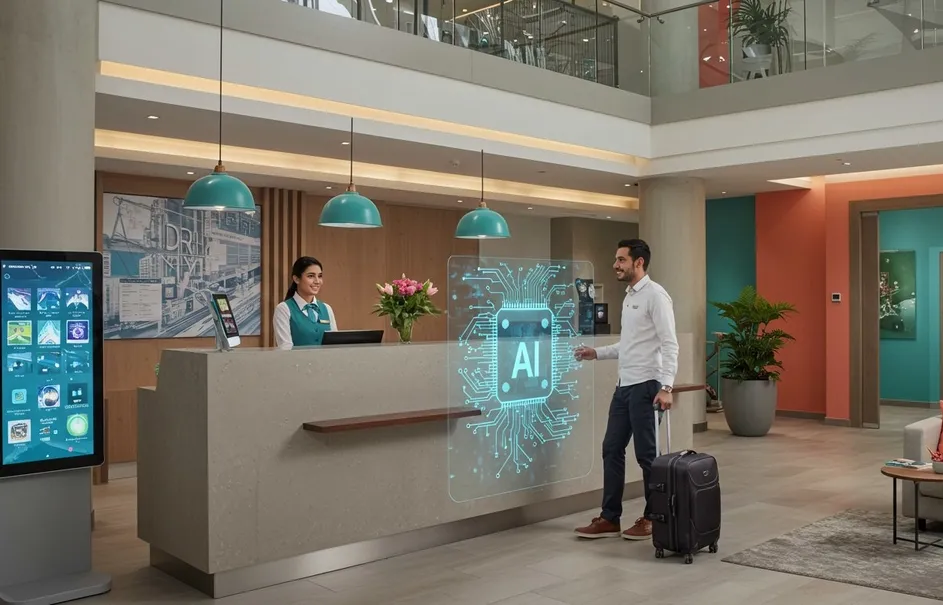
The biggest transformation I’ve witnessed in the hospitality sector over the past five years has undoubtedly been digital technology seeping into every corner of operations. This change, which accelerated during the pandemic, has now become necessary for the survival of not just big chain hotels but boutique and mid-sized businesses too. But digital transformation is not just buying technology; at its essence, it means restructuring your people, your processes, and your service philosophy.
In this article, I’ll address the steps hoteliers need to take on the digital transformation journey, giving examples from real scenarios. Because a technology investment without the right strategy just consumes the budget; applied the wrong way, it can worsen your employees’ and guests’ experience.
Analyzing Your Current Situation Is the First Step
Before starting digital transformation, you need to clearly understand where you stand as a hotel. The most common mistake I’ve observed while working with many hotel managers is trying to copy what other hotels do. Yet every business has its own dynamics, difficulties, and opportunities.
When evaluating your current situation, ask the simplest questions: How much time do you spend in the reservation process? Which topics do your guest complaints mostly concentrate around? Which tasks do your staff spend most of their time on? During a project I worked on with a hotel manager, we discovered that receptionists spent a third of the day on manual payment transactions. When we set up an automated payment system instead, the same team was able to spend far more time on customer service.
This analysis stage doesn’t have to be expensive. Do staff interviews, observe the operational flow, and examine your data to create a baseline. This information will be the foundation of making the right technology choices.
Technology Selection That Puts the Guest Experience at the Center
There are hundreds of hospitality software and digital solutions in the market. The most critical criterion when making a selection is this: How will this technology improve the guest experience? If the answer isn’t clear, turn down the investment.
Mobile check-in apps, smart room technologies, AI-supported concierge services—these tools, depending on how they’re used, can be either very valuable or completely unnecessary. A boutique hotel owner told me they had set up an expensive AI chatbot but guests still called for simple questions. Why? Because the chatbot wasn’t solving guests’ real problems and the personal touch was missing.
When choosing digital tools, don’t forget that they should increase staff efficiency while at the same time preserving service quality. The Property Management System (PMS), housekeeping apps, reservation engines—choose an ecosystem that can integrate these and communicate smoothly with one another. Fragmented systems cause each department to get stuck in its own data.
Preparing Your Team Is as Important as the Technology
This is the critical point most hotel managers overlook. Even if you buy the most modern hotel management system, if the people who will use it aren’t trained and willing, the system becomes unusable.
When transitioning to digital transformation, have sincere conversations with your team. Some employees may see automation as job loss. Listen to these concerns and speak openly: Digital tools offer the opportunity to get rid of routine tasks and do more meaningful work based on guest interaction. A receptionist can chat with a guest and offer recommendations instead of filling out check-in files.
When designing training programs, make them practical and application-oriented. Software company trainers usually give general information; what you need is hotel-specific training integrated into the work. For example, when teaching PMS to housekeeping staff, show them not just opening the system but how the system plays a role within a room’s cleaning cycle.
Also, in the early stages of digital transformation, identify “digital champions.” From each department, choose a few people who adapt technology easily and can influence their colleagues. Train them more deeply; they can also provide support to their team.
Using Data as a Strategic Asset
When digital systems start being applied, you have multiple data sources. Guest feedback, room occupancy rates, staff performance metrics, energy consumption—this information offers you a strategic advantage.
A mid-sized hotel, after keeping its electronic records for the last year, discovered that most of the most-complained-about problems were actually not technological but operational. Guests were complaining not about bad Wi-Fi but about unclean rooms. This finding caused them to increase the housekeeping budget instead of IT, and as a result guest satisfaction increased.
Use data analytics not just for problem detection but for finding opportunities too. In which periods, when the hotel is full, do staff do how many hours of overtime? Which services often disappoint customers? Data-based answers to these questions enable you to make your investments more wisely.
Value Gradual Application and Flexibility
You can do digital transformation with an “all or nothing” approach, but this usually fails. Instead, start pilot projects. For example, test the mobile check-in feature with a certain guest group, get feedback, improve it, and then open it to general use.
This gradual approach both gives your team an adaptation period and lets you fix system disruptions without causing the whole operation to collapse. Also, you don’t have to remove everything just because “this system doesn’t work”; you just improve that section.
Technology in the market changes fast. With every step you take, keep compatibility between systems and future expansion in mind. When choosing a payment system, consider that you may need to switch to another PMS system after five years. Easy integration with those systems will keep your future decisions free.
Conclusion: Digital Transformation Is a Journey
Digital transformation is not a project but a continuous journey. Technology evolves fast, guest expectations change, competition increases. If you don’t stay stationary, you fall behind.
But a successful transformation is much more than buying technology. Prepare your people, make sense of your data, put the guest experience at the center, and preserve flexibility. Success comes to those who succeed in balancing these four elements.
If you’re thinking of transitioning to digital transformation as a hotel, don’t hesitate to consult a consultant or trainer. Mapping your own way by yourself can result in losing thousands of liras and months of valuable time. At Okay Supports, we’re here to guide businesses at exactly this point, to ensure their digital journey is successful.