
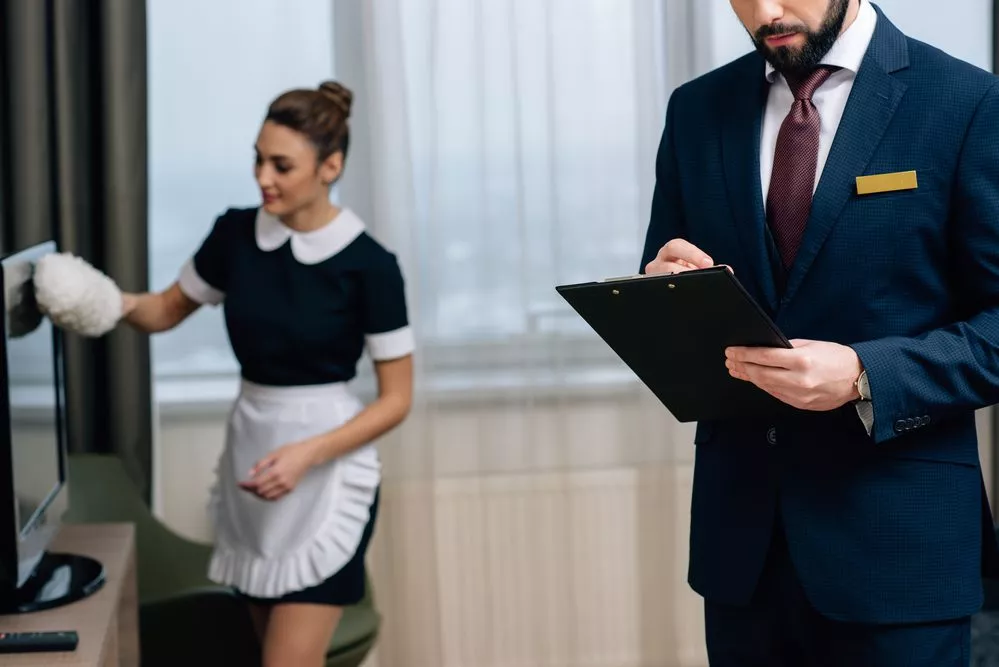
Last week, while having coffee with a hotel manager, we had a very interesting conversation. Things at the hotel were going well, guest satisfaction was high, but he still looked worried. I asked why. His answer was simply this: “I feel like I can’t even use sixty percent of the team’s potential.” After that conversation, I thought that maybe many hotel managers are in the same situation. Because leadership is not just giving directions or solving problems; it’s inspiring people, developing them, and reaching success together.
Leadership in the hospitality sector is different from many other industries. You have to make human-focused decisions every day. There are guests, there are team members, there are unexpected situations. Being an effective leader in this dynamic environment requires commitment to certain principles. This is exactly the point where I want to share ten basic leadership principles I’ve seen and applied in various hotel operations over the years.
1. Setting an Example – What You Do Matters, Not What You Say
A leader’s most powerful communication tool is not their words but their actions. If you expect your staff to be in the office at eight in the morning, you should be there at eight in the morning too. Even earlier. If you want them to behave professionally toward guests, you should first be professional toward your team.
At the hotels I’ve worked at, the most successful managers were always the hardest-working ones. But this doesn’t mean being harsh or emotionless this way. On the contrary, they set an example by showing they were ready to help. When there’s a guest complaint, the manager goes to the solution. When there’s a waiter short in the front section, the manager takes on a role in that shift. Such behaviors enormously increase the team’s morale and commitment.
2. Communication Should Be Built on Openness and Consistency
Decisions made behind closed doors become gossip in the open. In the hospitality sector, the flow of information is fast and effective. If you’re not transparent about management decisions, staff fill the gaps according to themselves. This usually leads to erroneous information and a lack of trust.
When there’s a policy change, explain its reason. When a department goal is set, explain why that goal needs to be reached. Follow an open-door policy in monthly meetings. Don’t avoid answering questions from the team. Inconsistent communication damages the leader’s credibility over time. But consistent, open, and honest communication is the most powerful leadership tool.
3. Recognize and Value Individual Differences
The thirty people working at a hotel are thirty different people. While one works for their children’s education, another may carry career goals. While one shines on the morning shift, another blossoms on the evening shift. An effective leader understands these differences and adapts the work environment accordingly.
When staff evaluations are done, expecting everyone to be measured by the same yardstick is a mistake. While one person’s strength is careful and detail-oriented work, another’s strength may be fast decision-making. The right leader places each team member in a position where they can use their own potential to the maximum. This not only creates a more efficient team but also increases individual satisfaction.
4. Distribute Reward Fairly but Recognize Success
A good leader pays for their staff’s work not just with salary but with recognition and appreciation. In the hospitality sector, financial budgets can be tight. But this should not prevent giving recognition.
Highlight the receptionist who stood out in the guest satisfaction survey in the team meeting. Have a simple coffee or short chat with the food service that received the fewest complaints during the month. If you can give an annual bonus or raise, show fairness and consistency. Although successes vary from person to person, recognition and appreciation should be equal for the whole team. Fairness forms the foundation of a team.
5. Offering Development Opportunities Is Not an Option but a Responsibility
Staff turnover can be high, but this doesn’t remove the responsibility that you need to invest in developing their qualities. Maybe someone will stay only two years, but how they develop in these two years is important not just for your hotel and team but for their entire career life.
Set aside a training budget. Organize the skill-development programs mentioned. Create mentorship systems. Create internal promotion opportunities. Staff know that if they work here, they can gain the skills and references necessary for a better position. This attitude naturally increases commitment and motivation.
6. See Difficulties Not as Problems but as Learning Opportunities
No hotel works perfectly. There are guest complaints, operational disruptions, or staff disagreements. While weak leaders try to suppress these problems, strong leaders try to understand them.
When a mistake is encountered, instead of taking a blaming attitude, ask what went wrong and how it can be improved. Instead of discouraging staff when they make a mistake, support their development according to what they learned from that mistake. This approach creates an environment where the team isn’t afraid to take risks and innovate.
7. Base Your Decisions on Data, Not Emotions
Hotel management is an area full of human aspects. But this doesn’t mean decisions will be made according to emotions. You can show emotion and understanding, but you should build your decisions on data and objective criteria.
For example, in raise or promotion decisions, saying just “that person is very likable” is not enough. Look at performance metrics, guest evaluations, work-safety attitude, and team play. Service quality metrics, numbers showing efficiency, customer feedback—this data should be the foundation of your making objective and fair decisions.
8. Delegation Is Showing Trust
Gathering all decisions and responsibilities in yourself shows not management but bottlenecking. Effective leaders trust their teams and delegate tasks. This ensures the team develops and gives you the opportunity to focus on strategic tasks.
If you start sitting at reception too just because there’s a reception problem, you become unable to do the strategic work you need to do as a manager. By showing trust to staff who need correction, provide the necessary support, but give them the responsibility. This both speeds up the staff’s development and lets you lead from a broader perspective.
9. Listen – Real Leadership Starts Somewhere Other Than Talking
In some situations, the staff working at your hotel may have more information about guests and operations than you. The receptionist may have important clues because they talk directly with guests. The cleaning staff may have suggestions for improving rooms. The kitchen chef may have found a more efficient way in menu design.
Listen regularly. Apply an open-door policy. Organize information-gathering meetings. Ask your team the question “How can we do better?” Many managers think strategies are news that goes from them downward. But the best ideas often come from the bottom up. You just need to listen and evaluate them.
10. Share a Vision – One That Explains Why We’re Here
The last and perhaps most important principle is sharing a vision. Staff want to work not just to earn money but to be part of a purpose. As important as “Please clear your tables within 15 minutes” is the message “By doing this, we’re improving the guest journey this way and making their weekend nicer.”
Hotel management has not just a customer-satisfaction goal but a deeper purpose. Guests usually want to create memories they can’t forget. Your team is the architect of these memories. If you share this perspective, staff become not just people doing tasks but creators of an experience. Work gains meaning.
Applying These Principles Together
These ten principles are not isolated pieces of advice. They work together, as a whole. Setting an example and having open communication form the foundation of all the other principles. Recognizing individual differences and making decisions with data create a fair management system. Offering development opportunities and delegation make a team strong. Listening and sharing a vision motivate the team and keep it committed.
Successfully applied leadership takes time. Don’t expect immediate results. But with patience and consistency, when you put these ten principles into daily practice, you’ll see how the team dynamic changes, how the staff turnover rate drops, and how operational success increases.
As a hotel manager, you carry not just a position—you carry a responsibility. How your human team develops, the quality of the guest experience, the hotel’s reputation—all of these are directly affected by your leadership style. By adopting these ten principles, you can be not just a better manager but a better leader. And this is exactly where the real difference begins.