
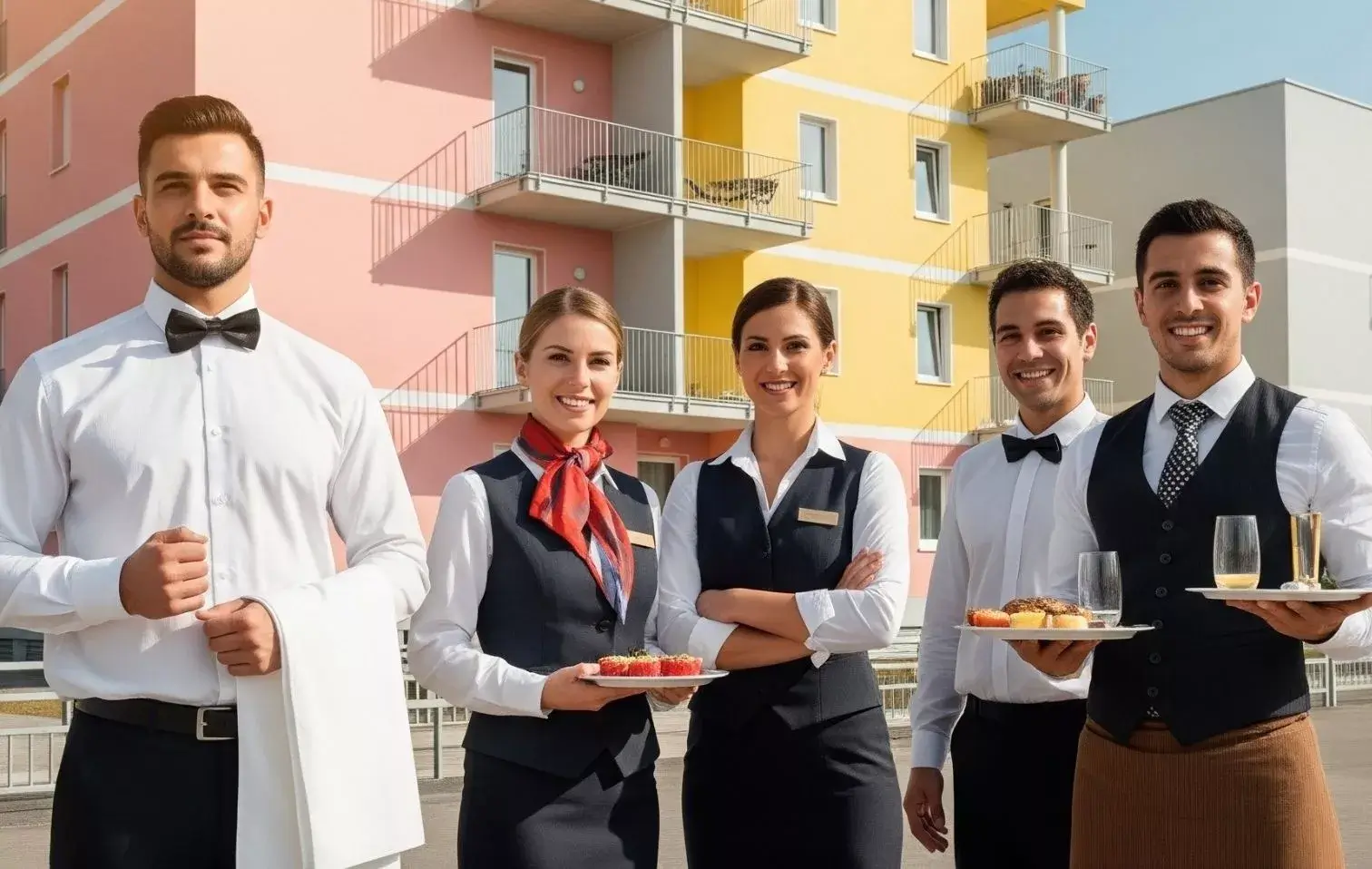
Success in the hospitality sector is not ensured just by operational excellence or technical knowledge. In my observation, the hotels that provide the best service are always organizations that have succeeded in creating a strong team spirit. Recently, many hotel managers I’ve spoken with talk about high staff turnover and motivation problems. But at the foundation of these problems often lies a weak sense of acting together as a team.
Strengthening team spirit is actually not limited to a few big events. On the contrary, through systematic and thoughtful activities, connection, trust, and a sense of shared purpose can be created among employees. In this article, I want to share activities that are applicable in hotel operations and can give real results, with practical examples.
Why Is Team Spirit So Important in Hospitality?
A hotel is actually a whole made up of countless small details. Reception, housekeeping, kitchen, service, security—each department depends on another’s success. When a guest comes to the hotel, their experience is the result not of just one department’s work but of the whole team working in harmony.
When there’s no team spirit, a disconnect between departments emerges. Problems occur between the kitchen and service, housekeeping and reception don’t talk with one another, and problems aren’t solved. But when there’s a strong team spirit, everyone works for the shared goal and problems are solved quickly. This is why team activities are not just “fun”—they’re investments that directly affect the business’s efficiency and profitability.
Activities That Develop Inter-Departmental Cooperation
One of the biggest challenges of hospitality is the diversity of employee profiles and shifts. Morning shift, evening shift, night shift—some teams never come together. This naturally creates a disconnect between departments.
To solve this problem, you need to consciously create environments of inter-departmental interaction. For example, once a month, you can organize “operational breakfast” meetings that representatives from all shifts attend. Here, without giving preliminary information on any topic, an opportunity is just given for departments to talk. The kitchen chef gets to know the housekeeping team, and the receptionist learns what the service staff think.
Another approach is “job shadowing” activities. A service staff member works with the housekeeping team for a day; a housekeeping staff member spends a shift at reception. This not only creates empathy but also helps understand the responsibilities each department carries.
Success-Celebrating and Motivation Activities
Working in the hotel sector is physically and emotionally tiring. Especially in seasonal intensity periods, employees give a lot. Unfortunately, these efforts are often overlooked and only negatives are emphasized.
Celebrating success systematically increases team morale considerably. At the end of a monthly period, celebrate the department that got the highest customer satisfaction score. Do this not just as verbal appreciation but with small but meaningful rewards (extra time off, bonus, or things they prefer). Most importantly, share these successes in a way everyone can see—on bulletin boards, in staff meetings, on social media.
Simple activities like remembering staff birthdays and appreciating special occasions (graduation, marriage, having a child) also strengthen team spirit. On an employee’s birthday, the team preparing a small surprise or mentioning their name gives the message “you matter to us.”
Brainstorming and Problem-Solving Sessions
Hotel operations change constantly. New problems emerge, new opportunities are seen. Management alone may not solve these problems—the best solutions often come from employees who are in the thick of the work.
Periodically, by bringing together people from different departments, discuss operational problems or improvement opportunities. For example, ask the whole team the question “How can we make our guests’ morning breakfast experience better?” Kitchen, service, reception, housekeeping—each department will offer ideas from its own perspective. These ideas, whether valuable or not, create in the participants the feeling that “they play a role in this hotel’s success.”
Actually apply some of the ideas offered and announce it in a way everyone can know who it started with. This strengthens employees’ participation and sense of ownership.
Fun and Social Activities
Professionalism and fun don’t exclude one another. On the contrary, well-managed social activities are one of the most effective catalysts of team spirit. What matters here is that the activities are participatory, inclusive, and open to everyone.
You can organize an annual hotel picnic, sports tournaments, culture and art events, or simple breakfast get-togethers. But the critical point is that these activities are open to all shifts and departments and that management actively participates too. The general manager, the kitchen chef, and the receptionist playing together in the same football match brings down the walls of hierarchy.
Another benefit of social activities is getting to know employees’ private lives. As you learn that a housekeeping staff member is a beautiful painter, that a service staff member is an excellent home cook, you move from professional relationships to a sincere team.
Training and Development Programs
Strengthening team spirit is ensured not just with fun or social activities but also through a shared development journey. A team where everyone attends the same trainings, learns the same information, and internalizes the same standards automatically works more harmoniously.
Organize regular trainings especially on service quality, customer communication, and hotel protocol. What’s valuable here is that these trainings aren’t boring presentations but interactive, participatory, and include the perspectives of different departments. Present a customer-complaint scenario and discuss how everyone (reception, housekeeping, kitchen) would react. This lets them discover different thoughts between departments and develops a customer-centered understanding.
Regularity and Consistency Are Very Important
Team activities are not one-time moves. Just because you did a picnic once, team spirit doesn’t form. On the contrary, regular, consistent, and continuous activities can create real cultural change.
Create a calendar in which you plan what you’ll do every month, every quarter, every year. Staff will start to anticipate these activities, prepare, and be happy to participate. Consistency is the indicator of commitment; this is the most important foundation of team spirit.
Conclusion: Team Spirit Is One of the Business’s Foundations
In hospitality, the best service comes not from the best facilities but from the best team. A hotel without a strong team spirit, however beautiful its decoration or technological devices, can never be successful. Conversely, a harmonious, highly motivated team that stands behind one another can turn even an ordinary hotel into a luxury one.
The activities mentioned—inter-departmental cooperation, celebrating success, brainstorming, social events, and training programs—all together form the solid foundations of team spirit. When starting to apply these, you can start small. One meeting a month, one activity a season. But the moment you start, you’ll see a difference in employee participation, satisfaction, and the business’s overall performance.
As hotel managers, our responsibility is not just to ensure operational excellence but also to create an environment where people are happy to work. Team activities are the most practical and effective way to this goal. You can start today to take a step on this path.