
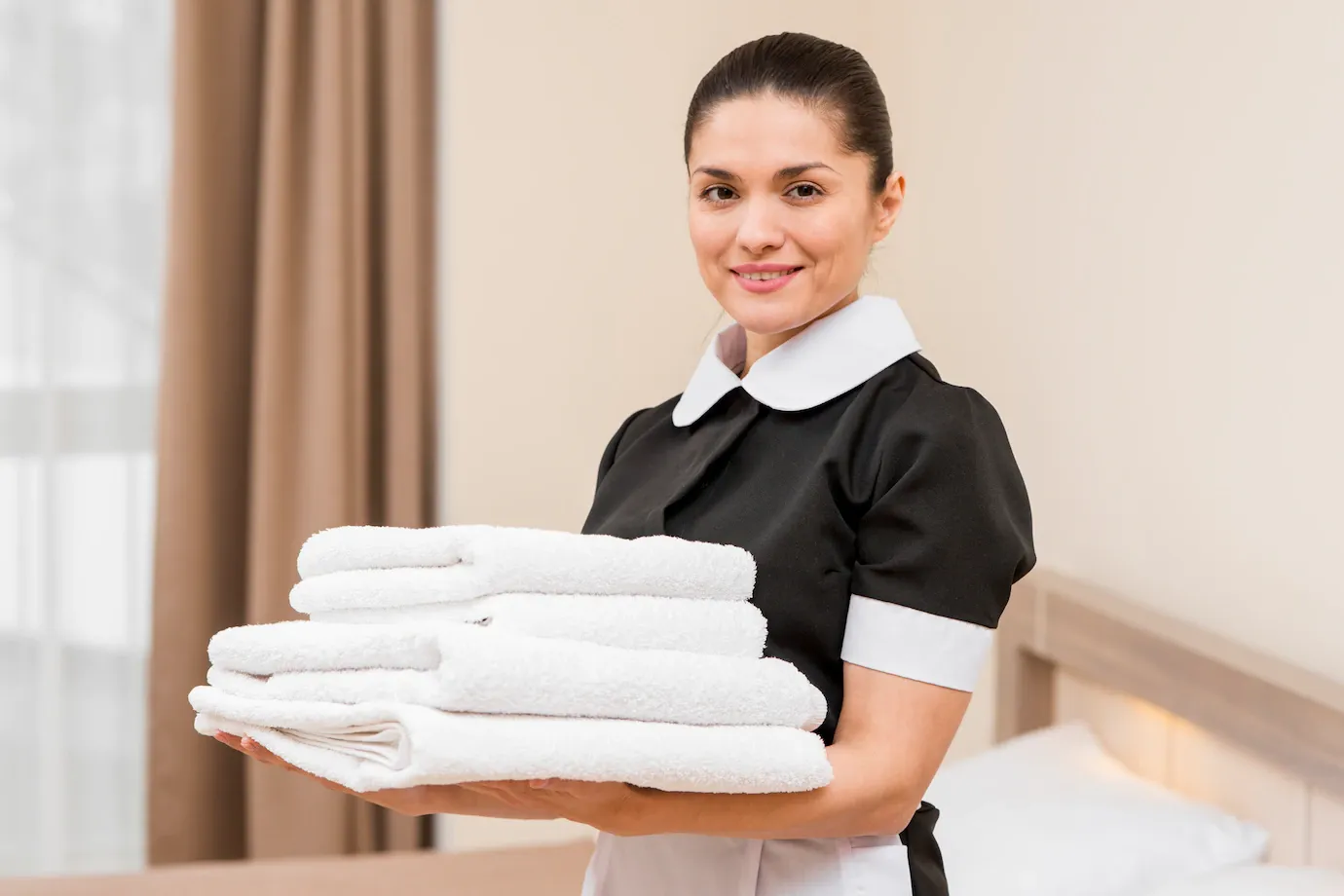
I’d say the housekeeping department is the heart of the hotel. When our guests open the door to their room, the first impression that greets them plays a role as important as the hours spent at the front desk. But the success of this department, unfortunately, often stays invisible. The efficiency of housekeeping teams working quietly in the background is determined not just by cleaning quality but also by employees’ moods, turnover rates, and ultimately guest satisfaction.
In the more than a hundred hotels I’ve consulted for over the past years, I’ve observed that housekeeping staff’s biggest struggle is not actually time management. The real problem is not knowing how to use time effectively. Of two staff members doing the same tasks, one finishes their work at 2 p.m. while the other keeps working until 6 in the evening. The difference comes not so much from being hardworking as from working smart.
Why Is Time Management So Critical for Housekeeping?
Seeing the housekeeping job as simple cleaning means missing the whole problem. Each room cleaning is actually a disciplined operation. Guests leave at the 12:00 check-out time, and check-in begins at 3:00 p.m. Within this three-hour window, we must get all the rooms ready. A housekeeping staff member who can’t finish the work on time adds not only to their own stress but also negatively affects the tension at reception, guest satisfaction, and the entire hotel operation.
Also, when the workload can’t be distributed evenly, some staff become overloaded while others wait idle. This creates an unfair working environment, causes conflicts among staff, and in the long run causes good employees to leave. Yet with the right time-management techniques, you both increase efficiency and improve team morale.
Planning Room Cleaning by the Clock
One of the basic principles of housekeeping is setting a standard time for each room type. Standard room, suite, family room—each requires a different cleaning time. For example, a 30-square-meter standard room can be cleaned in 25–30 minutes under normal conditions. A suite can take 50–60 minutes. The purpose of setting these standards is not just to put a number down. The aim is to ensure staff clearly understand what they need to do and when they need to finish it.
To do this, take your fastest, highest-quality current staff member and, watch in hand, have them clean a room. Write down every step. How much time is spent at which stage? Is the flushing time long? Does bringing and taking cleaning supplies take time? How long does carrying the room’s trash consume? After this analysis, share the standards you’ve set with your team. The critical point here is that the standard should be used not to punish, but for motivation and guidance.
The Art of Route Planning and Room Sequencing
The movement housekeeping staff make throughout the day can account for about 20–30% of total efficiency. Consider this scenario: a staff member starts on the 4th floor and goes down to the 1st, then goes back up to the 6th. This worker loses valuable time to elevator waits, carrying a loaded cart, and getting on and off.
Smart route planning is this: the rooms to be cleaned are grouped by floor and completed following one direction. The staff member starts on the 1st floor, cleans all rooms on that floor, then goes up to the 2nd. This simple but effective method reduces movement distance and increases concentration. Also, moving supplies becomes more efficient, because staff can carry all the supplies needed for one floor at once.
Preparing different routes for different room types often makes sense too. Rooms for deep cleaning, rooms for a cross-clean, rooms for a refresh only—each group should follow a different route. This lets staff spend their mental energy in fewer places.
Strategic Positioning of Cleaning Supplies
At a five-star hotel where I currently work, I observed that housekeeping employees spend a significant part of the day looking for supplies. Where’s the cloth? On which shelf is the cleaning spray? Has the floor polish run out? Such questions cause the worker to step away from cleaning the room and keep searching the storeroom.
The solution is simple but effective: create mini-storage points on each floor. If there’s a storage shelf or cabinet on the opposite side of each floor, housekeeping staff can grab the supplies they need right there and keep going. This also offers a perfect opportunity to maintain inventory and cleaning standards. Missing supplies are noticed immediately and reported to the storeroom. Staff don’t spend time on inefficient trips to the storeroom.
When positioning supplies, put the most frequently used ones in the most accessible places. Toilet paper, trash bags, and basic cleaning supplies should be at a quick-access point. Less frequently used products can be in the central storeroom, but staff must know how to obtain these products when needed.
Equipping Staff with the Right Tools
An efficient housekeeping team starts with the right equipment. Torn cloths, a vacuum that doesn’t work, a stuck cart—a staff member working with these tools cannot succeed no matter which time-management technique they try to apply. Because the problem is not in the person, but in the tool.
Do these checks regularly: do the carts’ wheels turn? Are the cleaning supplies sufficient? Are the electrical tools safe and functional? Is the staff equipped with appropriate work clothing? Are they using ergonomic tools? (For example, tools with a handle system instead of cloths that require bending over.) These simple checks can increase staff productivity by 15–25%.
Simplifying the Workflow: The Checklist System
The most effective way to ensure consistency in housekeeping is to use a room-cleaning checklist. This list shows all the tasks to be done in each room, in a logical order. By following the list, staff forget nothing and can also track how many minutes it took them to finish.
Items that should be on the list: changing sheets and pillowcases, floor cleaning, every corner of the bathroom, mirrors, fixture cleaning, and a final check. When staff complete each item in order, the room is fully ready. This system is also a great tool for training. When training new staff, you show this list to clearly specify exactly what they need to do.
You can print the list digitally or on a simple sheet of paper. What matters is that it be created in consultation with staff and updated regularly. If it starts as paper, you can naturally move to mobile apps as you modernize. But starting as a system can always be done with handwriting and simple forms.
Motivation and Efficiency Rewards
Time-management techniques are not just procedure and system. The human factor is very important. If it makes no difference when housekeeping staff finish their work on time, why would they make extra effort? Yet the right motivation system encourages people to improve their own performance.
Some hotels do monthly scoring on cleaning quality and time management. The best-performing staff member may receive a bonus, get flexibility on time off, or simply be recognized and given a certificate. If budget resources are limited, a simple reward system is enough: the best staff member of the month can go out for a meal at a restaurant, or have their breakfast at the hotel for free.
When setting up a motivation system, be fair and transparent. Staff should know what they’re being evaluated on. Rather than a general compliment like “You’re a hard worker,” saying “This month you finished the rooms within the standard time and your quality score was 95—congratulations” is far more effective.
Technology and Property-Management-System Integration
Today, many hotels use a property management system (PMS). This system tracks the status of rooms (clean, dirty, needs maintenance, and so on). If housekeeping staff work integrated with this system, time management improves significantly.
For example, staff can see with a mobile device (tablet or phone) which rooms they’ll clean at the start of the day. After cleaning a room, they mark it “clean” in the system. That way, reception can see live which rooms are ready. This both reduces reception’s workload and gives housekeeping staff real-time feedback.
If there’s no system or it’s too expensive, even a simple spreadsheet can be useful. The questions of which staff will clean which rooms, by what time they should finish, and whether they’re clean can be easily answered. However sophisticated the system, what matters is that information is shared quickly and accurately.
An Example from the Real World
At a boutique hotel I consulted for, the housekeeping team’s previous manager was very authoritarian. Because the staff were afraid of working fast, they deliberately worked slowly. The turnover rate had exceeded 40%. Together with a new manager, we applied the methods I mentioned above.
First, we set standard cleaning times (without threats). Then we created floor-based routes and set up mini-storerooms. We simplified the checklist. And importantly, recognition and small bonuses began to be given to the two best-performing staff. Six months later, the average cleaning time decreased by 18%, staff satisfaction rose dramatically, and the turnover rate fell to 15%.
Conclusion: Setting Up a System Is More Effective Than Pressure
Housekeeping staff’s time-management problems usually stem not from a lack of discipline but from a lack of system. When there are correct procedures, smart routes, appropriate tools, and a fair motivation system, staff begin to become more efficient on their own. No one can do work well under pressure. But a staff member who clearly understands the work they need to do and whose efforts are appreciated increases their performance without any pressure from you at all.
If you’re experiencing time-management problems in your housekeeping, the first step is to analyze your own operation. Where is time being lost? Why are staff finishing late? Is the problem the staff themselves, or the system? Changing the system without answering these questions is like being a coach who misunderstands all the rules of the game. After making the right diagnosis, choose and apply whichever of the techniques I’ve shared here best suit your situation. The result will be not just rooms cleaned faster, but a happier housekeeping team.