
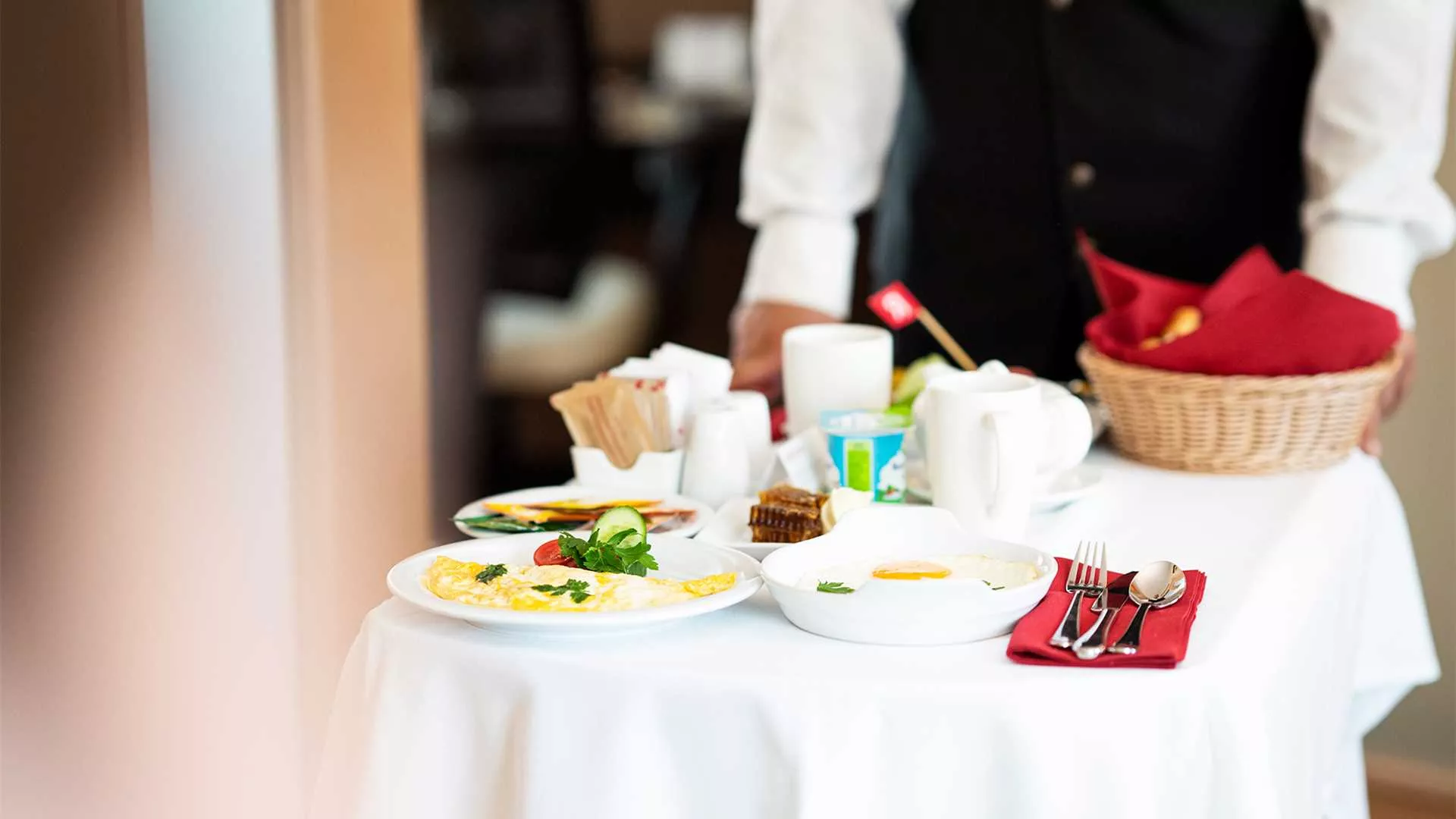
Room service is an operation that forms guests’ last impression of the hotel. What a guest remembers after they leave is often that final encounter—whether it’s the meticulousness of the room cleaning or the attention shown when closing out the front desk. For this reason, perfecting the room-service operation means not just raising cleaning standards but also solidifying one of the cornerstones of customer satisfaction.
The most striking difference I observed during my times working at many hotels over the past years is that the motivation and training level of room-service teams directly affects hotel success. No marketing strategy, no front-office policy, can cover for the indiscipline of the room-service team. So in today’s article, we’ll examine how to preserve quality while increasing operational efficiency and how to make your team more effective.
Clearly Define Standard Operating Procedures
The backbone of the room-service operation is standard operating procedures (SOPs). At most hotels, these procedures either don’t exist at all or sit forgotten in a corner. Yet a well-written SOP ensures that all team members speak the same language and that no detail is missed.
An effective SOP doesn’t just say “clean the room.” Instead, it clearly specifies exactly which steps a person visiting a room should follow, in what order, in how much time they’ll complete them, and what they should especially pay attention to. For example, from the start of a room cleaning to its finish:
The checks that need to be done when entering the room (upholstery, furniture, the bathroom’s condition), a logical order for the cleaning operation (starting from high areas first, down to the floor last), the chemicals and equipment to be used, small details like the 50 things that need to be checked during area inspection—all of these should be presented as a checklist. This way, an inexperienced staff member can do a job as good as an experienced one.
When writing the SOP, don’t write every procedure and share it with no one. The team itself should have a say in creating these procedures. That way, they take ownership of the procedures and take pleasure in applying them.
Don’t Ignore the Motivation Factor in Team Management
Room-service supervisors and coordinators are perhaps the least appreciated managers within a hotel. Yet managing these teams is not at all easier than managing a fast-paced reception team. In fact, it’s harder, because the time spent in each room and the quality of the person doing this work directly affect the guest.
The motivation factor is very important here. Employees work better not just for pay but because they feel valued. Hotels that show appreciation toward room-service staff have lower turnover and higher operational efficiency. To ensure this:
Mechanisms like monthly performance bonuses, recognition programs for the best room-service members, and special thanks based on quality-control findings are quite effective. Also, management needs to appreciate the role the room-service team plays in overall hotel operations and reflect this appreciation to the employees. Room-service performance should be addressed regularly in weekly management meetings, and successes should be celebrated.
Technology Integration: Use Systems Intelligently
Today, hotel management systems (PMS) can significantly ease room-service operations. But technology can only be helpful; it can’t do the work. The purpose of technology should be to make staff more efficient and reduce time loss.
Thanks to modern systems, guests’ special requests (like hypoallergenic cleaning products, vegan soap choices) can be known in advance. Room-service staff can take notes on a mobile device for each room they’ll enter. Completed rooms are instantly entered into the system, and reception knows in real time which rooms are ready. This both speeds up the operational flow and greatly reduces guest complaints.
But the point to watch here is that technology can never replace the human factor. A system can’t tell staff “check the furniture for dust in this room.” That check is done with a person’s careful eye. When technology and the human eye work together, the real result emerges.
Quality Control: Systematic Oversight and Feedback
Quality control is perhaps the most critical component of the room-service operation’s success. Unfortunately, at many hotels, because the staff doing the cleaning are under time pressure and the inspection staff aren’t sufficient in number, this part is overlooked. The result emerges as hearing about mistakes noticed by guests in the rooms a few days later.
An effective quality-control system should be both systematic and developmental. This means seeing the matter not somehow as a punishment mechanism but as a platform for developing the team. Every day, at different times and randomly, rooms should be checked, found problems should be discussed with staff, and improvements should be made.
Without being too long, the control checklist should cover the basic criteria: cleaning level, hygiene standards, room arrangement, functionality of electronic devices, minibar and beverage control, laundry and towel checks. The person doing the check should not avoid noting found problems in writing, discussing them with staff, and following up.
Training: Not a Beginning but a Continuous Investment
A training given when a new room-service staff member starts work is not enough for them to be able to do the whole job. In the operational environment, this training is consolidated, its gaps emerge, and new problems become clear. For this reason, training is not a beginning but a continuous investment.
An hour of training at the start of the month, an hour of guidance at the end of the month, gradually increasing responsibility over months—with this method, staff begin not just to do the work mechanically but to understand it. In addition, seasonal topics (increased cleaning demands in the summer season, heating-system checks in the winter months) or new-product introduction trainings speed up operational adaptation.
A good training program also offers staff a career perspective. Seeing a path from room-service staff toward a supervisory role motivates every employee and ensures quality people stay in this department.
Conclusion: Creating Synergy
Perfecting the room-service operation starts with understanding that none of the elements we’ve focused on is enough on its own. Without clear SOPs, technology is of no use; an unmotivated team won’t apply standards; untrained staff can’t use even the best checklist.
Instead, when you run all these elements together, consistently, your room-service operation becomes the champion of the hotel’s customer satisfaction. Your guests, when they enter the room, feel that meticulousness, that attention to detail, and—most importantly—that care.
Today, the improvement I’ve seen at the hotels I work with at Okay Supports clearly demonstrates the success of this holistic approach. Along with training the team, setting up a system, and keeping motivation alive, a perfect room-service operation can be built. If you’re currently experiencing challenges in your operation, it’s never too late to identify which stone appears to be missing and start there.