
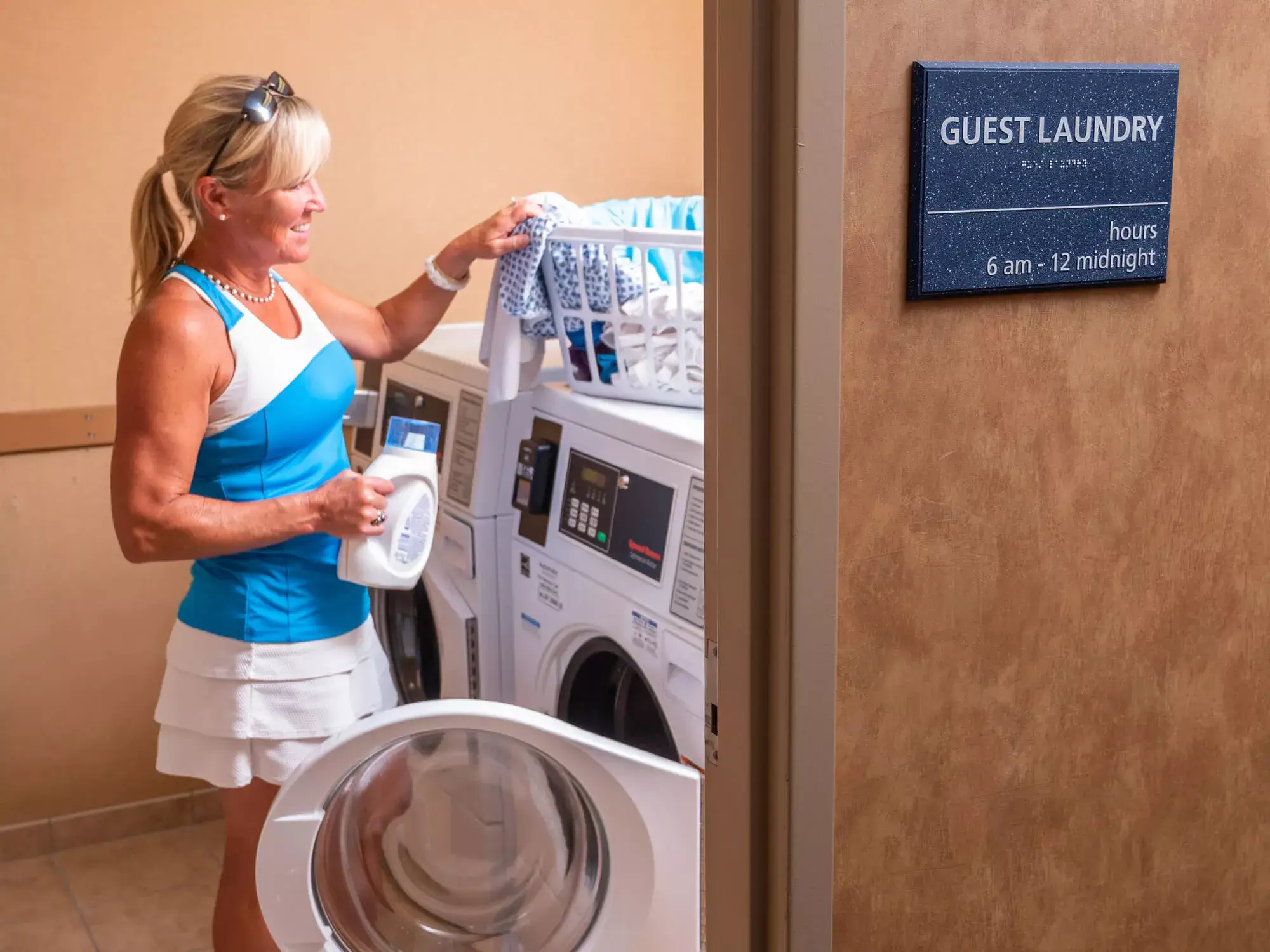
For hotel managers and operations officers, the laundry department usually remains an invisible but indispensable section. Guests want to see clean, flawless sheets, towels, and uniforms, but they often don’t realize how complex a system works behind the scenes for this. Laundry operations are not just about washing and ironing dirty laundry; they are, in fact, a critical operation that directly affects the hotel’s efficiency, costs, and guest satisfaction. Optimizing this department, which holds an important place among operating expenses, is reflected in the entire hotel’s financial health.
The Fundamentals of Increasing Efficiency in Laundry Operations
To improve laundry operations, you first need to clearly understand the current situation. How many kilograms of laundry are processed daily? After each sheet is washed a certain number of times, how many days is it stored? Trying to make any improvement without knowing the answers to these questions is like stepping into a void. Improvement can’t begin without correct measurements and data collection.
Today, most hotels have begun using software systems to manage laundry operations. These systems track where laundry starts and where it goes, measure staff efficiency, and reduce losses. If your business isn’t yet using such a system, this should be the very first step. Otherwise, do you really know how many sheets are lost, or how much laundry each staff member processes?
Redesigning the Workflow: Setting Up the Right System
In the laundry department, the workflow has a cyclical structure. Laundry collected from rooms comes in, is sorted, washed, dried, ironed, and then distributed again. Every delay that occurs in this cycle negatively affects the whole process. For example, if floor staff can’t find enough clean sheets, room cleaning will be disrupted, and this will lower guest satisfaction.
A successful laundry operation pays attention to time and motion economy at every stage of this cycle. During the collection, transport, storage, and redistribution of laundry, unnecessary paths and movements should be eliminated. At some hotels, the distribution of sheets from the laundry department to floor staff is limited to specific time slots per hour. This aligns with the floor staff’s working rhythm and distributes the laundry’s workload evenly.
Technology and Equipment: Working with the Right Tools
Although laundry equipment requires a significant investment, this investment pays for itself over time. Modern, energy-efficient washing machines and dryers consume far less water and electricity than old models. When a hotel processes an average of 500 kilograms of laundry a day, this saving can reach thousands of lira a year.
But there’s a point to watch when choosing equipment: capacity planning. Buying machines that are too small slows production speed and increases staff costs. Machines that are too large, on the other hand, mean energy waste when not running at full capacity. Hotel management should choose equipment taking into account the laundry volume at peak hours.
In addition, the laundry department’s layout also affects efficiency. Placing the dirty-laundry area, washing zone, drying and ironing areas, and the storage and distribution point in a logical order prevents staff from taking unnecessary steps. Shortening physical distances increases employee speed and morale.
Staff Training and Motivation: The Human Factor Must Not Be Forgotten
Even the best equipment and system won’t deliver results if operated by an untrained and unmotivated team. Laundry employees must know how to correctly wash, dry, and iron textile products. Different fabric types require different temperatures and methods. For example, while hotel bed sheets can be washed and dried at very high temperatures, some decorative textiles may need gentler treatment.
Beyond training, laundry staff need to understand the importance of their work. There’s something I often say: the laundry department provides the surface cleanliness that the hotel guest is in closest contact with. A guest sleeping on dirty sheets won’t be satisfied no matter how well the chef prepares the food. Instilling this awareness changes the staff’s attitude toward their work and raises quality standards.
Various methods can be used for motivation too. Reducing monotony through job rotation, giving incentive rewards based on monthly or weekly efficiency, or recognizing individual achievements within the department increases staff engagement. Even if someone working in the laundry department doesn’t do the same job for years, a quality difference is felt when they feel ownership of their work.
Loss Control and Inventory Management
The loss rate in a hotel laundry is a problem. Sheets, towels, pajamas, and other textile products can be lost for various reasons: being taken by guests, being damaged as a result of wrong processes, theft, or simple lack of oversight. At a five-star hotel, these losses are not amounts that can be ignored.
To bring losses under control, some hotels have added RFID tags to laundry or given each item a serial number. There’s also a simpler approach than applying this method: regular counts and checklists. Once a week, all laundry can be compared with the inventory. If losses are detected, it can be understood on whose watch the loss occurred. Such statistics provide a reference point for measuring the effectiveness of measures taken afterward.
Cost Optimization: Water, Electricity, and Chemicals
Laundry operations can account for about 3% to 5% of hotel operating costs. This includes not just staff expenses but also operating expenses like water, electricity, detergent, and other chemicals. Savings made on these items are reflected directly in profit.
Optimizing the amount of detergent used in washing, for example—excessive amounts are often used, and this both affects water quality and creates extra water consumption in the rinse cycles. Your chemical supplier or consultants can help determine the correct dosage. Similarly, the optimum temperature and time in the dryer can reduce energy consumption.
Water saving is an area frequently overlooked in laundry operations. Modular and efficient washing systems provide significant water savings compared to older equipment. Also, if laundry is sorted correctly before loading (whites, colors, heavy textiles), washing cycles can be optimized and unnecessarily repeated processes eliminated.
Outsourcing versus In-House Operation: Making the Right Choice
Some hotels prefer to give laundry operations entirely to external suppliers, while others structure all processes in-house. Both approaches have advantages and disadvantages.
Doing it in-house means the hotel management controls the entire process, sheets are processed urgently when needed, and quality standards are firmly set. But it requires high operating costs, staff-management challenges, and equipment investments.
Outsourcing, while providing low fixed costs and flexibility, can create quality-control challenges, dependence on delivery times, and uncertainties in terms of guest experience. As a middle path, some hotels choose to process room sheets and basic textiles in-house while preferring to send technical and specialty textiles to external suppliers.
Conclusion: A Systematic Approach, Sustainable Success
Optimizing laundry operations is achieved not with a single move, but with systematic and continuous improvements. Data collection, correct technology investment, staff training, cost oversight, and regular checks turn this department into an asset of the hotel business.
Remember that the guest experience is not limited to reception, the restaurant, and room design. A guest who falls asleep and wakes up on clean, pleasant-smelling, flawless sheets becomes aware of all the value the hotel offers. This is exactly the point where a well-managed laundry department, like a quiet railway worker, forms the foundation of the hotel’s success.
If you think improvements need to be made in your laundry operations, now is the time to start. Begin with small steps, take measurements, observe the results, and make corrections. In the long run, these efforts will increase your team’s efficiency, reduce your costs, and—most importantly—raise your guest satisfaction.