
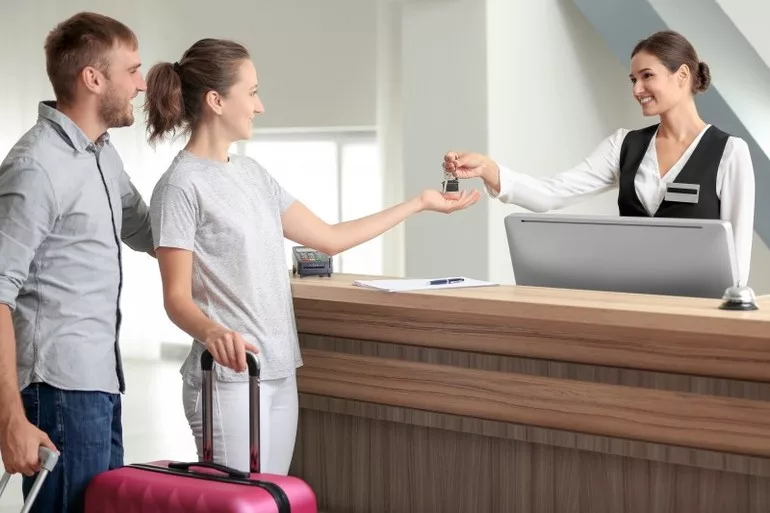
The success of hotels lies not in a single moment but in the ability to offer a whole experience. In my 30-year career, I have seen that the difference between the best hotels and average ones is often hidden in understanding what happens at every point of contact with the guest and optimizing those points. That is precisely why Guest Journey Mapping is not just a management tool; it is a strategy that fundamentally transforms service quality.
This journey, which begins before a guest even arrives at the hotel, continues even after their departure. Every touchpoint experienced over this long process affects the impression the guest carries away from the hotel. If you can’t see these points, you can’t improve them. If you can’t improve them, you fall behind your competitors. In this article, I will explain, step by step, how to create a guest journey map.
What Is a Guest Journey Map, and Why Does It Matter?
A guest journey map is a chart that visually represents all of a guest’s interactions, emotions, and needs with your hotel service. Starting from the moment of reservation, it covers check-in, the stay in the room, check-out, and all the experiences afterward. When you create this map, many blind spots emerge—a detail overlooked at the accounting desk, wrong information given at reception, moments when housekeepers failed to greet the guest warmly.
Successful hotels in the sector have made radical changes after producing this map. For example, a large hotel chain realized that the crowding at check-out time left a negative effect on guests and switched to an online check-out system. The result? Guest satisfaction rose by 28%. That is not a simple improvement; it is redefining the customer experience.
Before Creating the Map: Gathering Data and Interviews
Creating a guest journey map is not like decorating a room. You can’t start at random. First, you need to collect data. Yes, it takes a lot of time, but if you skip this step, the map you end up with won’t be realistic.
First, talk to real guests. Starting from the receptionist and going all the way to the housekeeper, write down what everyone hears from guests. The answers to the question “What is the most frequent guest complaint?” are very valuable. At the same time, review online reviews. Evaluations on platforms like TripAdvisor, Google, and booking.com show at which point in the guest journey there is trouble. Why was four stars given instead of five? Understanding this shows you what to place at the center of your improvement efforts.
In addition, analyze customer communication data. Questions and complaints coming into guest services can be classified by time period. Is the problem occurring during reservation? After arrival? This information will show which stages on your map require the most attention.
Step by Step: Building the Guest Journey Map
When building the map, it is critically important to move from the guest’s point of view. You need to think as the person arriving, not from the manager’s perspective. As you do this, work through the following stages.
Stage 1: Define the Timeline. The start of the guest journey is not arrival at the hotel. It is the moment they visit the website. So your map should be divided into sections under these headings: Before (Awareness), Reservation, Pre-Arrival, Check-in, The Stay, Check-out, and After. Each section carries its own important touchpoints.
Stage 2: Write Down the Touchpoints. What happens at each stage? In the “before” period, the guest browses the website. During reservation, they receive an email, a confirmation message. The day before arrival, is a reminder email sent? What happens at check-in time? How quickly does reception move? Is the room clean, is it pleasant? All these points will be recorded on the map.
Stage 3: Map the Emotions. What does the guest feel at each touchpoint? If the wait time is long, they feel disappointment. If the room is nicer than expected, they feel happiness. These emotions are added to the map graphically, usually shown with a line that rises and falls. Returning to the hotel-chain example I mentioned at the start, the stress felt during check-out appeared clearly on the map as a “dip.” This visualization moved managers to act.
Stage 4: Identify Problems and Opportunities. After the map is drawn, mark it with red flags: “There’s a problem here.” Then mark green flags: “There’s an opportunity for improvement here.” For example, if the Wi-Fi connection is weak, that is a problem. If guests feel frustrated while messaging, it becomes visible on the map. Similarly, if a guest wants to leave early at check-out and runs into trouble because of prepayment, that is an opportunity: could you set up an automated check-out system?
Practical Application: Learning from a Real Scenario
A few years ago, a four-star boutique hotel experienced a drop in customer satisfaction. Its TripAdvisor score had fallen from 4.5 to 4.2. Management didn’t know why. We created a guest journey map, and something interesting emerged: guests were happy at check-in, satisfied in the room, and pleased with the food. But things turned negative fast at check-out. Why? The reception staff were trying to sell products that better showcased the hotel (opening the minibar, spa packages, and so on) at the very moment of check-out. The departing guest felt they were “being sold to” while saying, “I’m leaving.”
The map showed this problem clearly. The solution was simple but effective: no selling at check-out time—only thanks. Instead, after guests left, these products and packages were offered via email. The result? Within three months, the TripAdvisor score returned to 4.5, guest satisfaction improved, and return rates rose by 15%.
Enrich Your Map with Interlocking Factors
A guest journey map doesn’t only show the events on the guest’s side. A well-made map also shows what is happening behind the scenes. For example, if a guest is waiting during check-in, what’s going on in the background? Is the receptionist on a phone call? Is the computer slow? At each touchpoint, write down what is happening on the organizational side. That way, you solve not only the guest experience but also operational problems.
Also, consider creating separate maps for different guest segments. A businessperson, a tourist, a guest with family—each has a different journey. The businessperson wants fast check-in, the tourist wants information, families are interested in areas where their children can have fun. Creating a separate map for each group means developing tailor-made solutions for each one.
Keep the Map Alive: Continuous Improvement
A guest journey map is not a document you create once and then leave in a drawer. It should be reviewed on a monthly or quarterly basis. Are new problems emerging? Have the old ones been resolved? Do new technologies and new processes offer opportunities? The map must be dynamic.
Since mid-2024, AI-powered chatbots have become widespread in the hospitality sector. On your guest journey map, is there a chatbot touchpoint in the pre-arrival period? Do the automatically answered questions register as negative or positive on the map? Asking such questions keeps your map current and ensures it remains an effective tool.
Conclusion: Draw the Map, Transform the Journey
Guest journey mapping may look complex, but at its core it is simple: seeing the hotel through the guest’s eyes. Being able to see every step, every emotional fluctuation, from the perspective of the person arriving. When you do this, problems emerge—but so do opportunities. The truly important thing is that, after producing this map, all departments of the team (reception, housekeeping, food and beverage, accounting) gather around it and work to solve the problems together.
If you are reading this and you are a hotel manager, start creating a map this week. Talk to real guests. Over time, a guest journey map can become the most powerful tool that sets you apart from your competitors. My experience shows that hotels that don’t take this step come to regret it deeply years later. But the hotels that begin see a clear difference in guest satisfaction and return rates.
At Okay Supports, we train hotel teams in this mapping process. Because we know that the practice is as important as the theory. If you, too, want to begin this journey, take the step without waiting. Your guests are already telling you—you just need to listen.