
One of the most common problems I have seen in more than 30 years of industry experience is hotels failing to manage guest expectations. Simply delivering service is not enough; determining in advance what kind of experience you will create in the guest’s eyes is the key to keeping control in your hands. In this article, I want to share with you how critical expectation management is—something that directly affects guest satisfaction—and how you can apply it effectively.
Managing guest expectations is not merely a matter of marketing materials or reservation conditions. It is a philosophy that goes far beyond that. Correct expectation management means bringing the mental image your guest forms before arriving at the hotel into alignment with the reality they experience at check-in. When this alignment is achieved, the guest says, “This is what I expected, and this is what I got”; when it is not, disappointment is inevitable. Based on my experience, I can say that very few of these disappointments can be compensated for.
Where Do Expectations Come From?
Your guests’ expectations form from various sources, and understanding them is the first step of management. First, the hotel’s website, social-media pages, and the descriptions on booking platforms play a major role. The guest makes their decision based on the photos they see online, the descriptions written, and previous guests’ reviews. If your website says “luxury rooms” but the guest finds an ordinary room upon arrival, disappointment begins from the very first minute.
Guests’ past hotel experiences also shape their expectations. The quality of service they received at previous hotels, the biases formed according to a hotel’s category, and even the influence of recommendations from their circle of friends are quite significant. If a guest comes to a three-star hotel after staying at a five-star one, they will make comparisons, consciously or unconsciously. For this reason, communicating your own hotel’s category clearly and plainly is very important.
Another factor I have seen in the sector is seasonal variation. Guests arriving for a summer holiday have completely different expectations from those on a business trip. Similarly, the hotel’s location, the amenities it offers, and its price level also directly affect expectations. An expensive hotel is expected to meet higher standards than a cheap one, and this is entirely natural.
Management That Begins at the Reservation Stage
Guest expectation management actually begins long before the guest arrives at the hotel—during the reservation. Whether a reservation is made by phone, by email, or through an online platform, clear and honest communication must be established. For example, if the hotel’s Wi-Fi speed is limited, stating this in advance; if a room change cannot be guaranteed, saying so beforehand creates a realistic expectation in the guest’s mind.
The reservation team’s staff are, in fact, your hotel’s first representatives. The promises made here determine what kind of experience your guests will have in their first days. If someone promised over the phone, “There’s a wonderful room, its window looks out on the sea,” but the guest finds a mid-quality room upon arrival, a mistake was made at the very start. I have seen such situations hundreds of times, and each time they have been very hard to fix.
The most important thing to do at the reservation stage is to understand your guest’s special requests. Taking and noting information such as marital status, purpose of travel, allergies, and the presence of elderly people or children—then relaying it all to the whole team—gives the guest the feeling of “you know me.” This information is valuable data for personalizing the services to be offered at check-in.
Designing the Check-in Experience
When the guest first arrives at the hotel, they enter a critical moment of expectation management. The check-in process must be fast, professional, and warm. Because at this point the guest begins to compare reality with the promises on the website. Is the room cleanliness good? Is the hotel quiet? Are the staff helpful? All these questions are answered in the first hours.
In my experience, if the website says “the hotel is located in a peaceful setting” but the guest hears construction noise upon arrival, that is an expectation-management error. In this case, the issue should have been communicated beforehand. Similarly, if breakfast was promoted as “rich and of five-star standard” but the guest finds a simple breakfast upon arrival, disappointment is inevitable.
During check-in, clearly explain all the hotel’s facilities to your guest. The Wi-Fi password, the location of the elevator, reception hours, contact numbers for emergencies—all of these matter. At the same time, if a service promised on the website is unavailable or limited, explaining this sincerely at this point helps the guest form reasonable expectations.
Monitoring Expectations During the Stay
When the guest begins their stay at the hotel, expectation management is not over; on the contrary, monitoring and alignment must continue here. Between the first and second day, it is important to have a check-in conversation with your guest. Test the alignment between the guest’s expectations and reality with questions like, “How are you finding the hotel? Is there any problem?” Any complaints or expectations expressed in these conversations should be resolved quickly.
Because it’s worth remembering this reality: a guest’s expectations can change during the stay, and new expectations can form. For example, they may have thought “a simple room is enough” when they first arrived, but by the second day they may start to be disturbed by noise from next door. In such cases, it is possible to solve the problem proactively and turn the experience the guest remembers into a positive one.
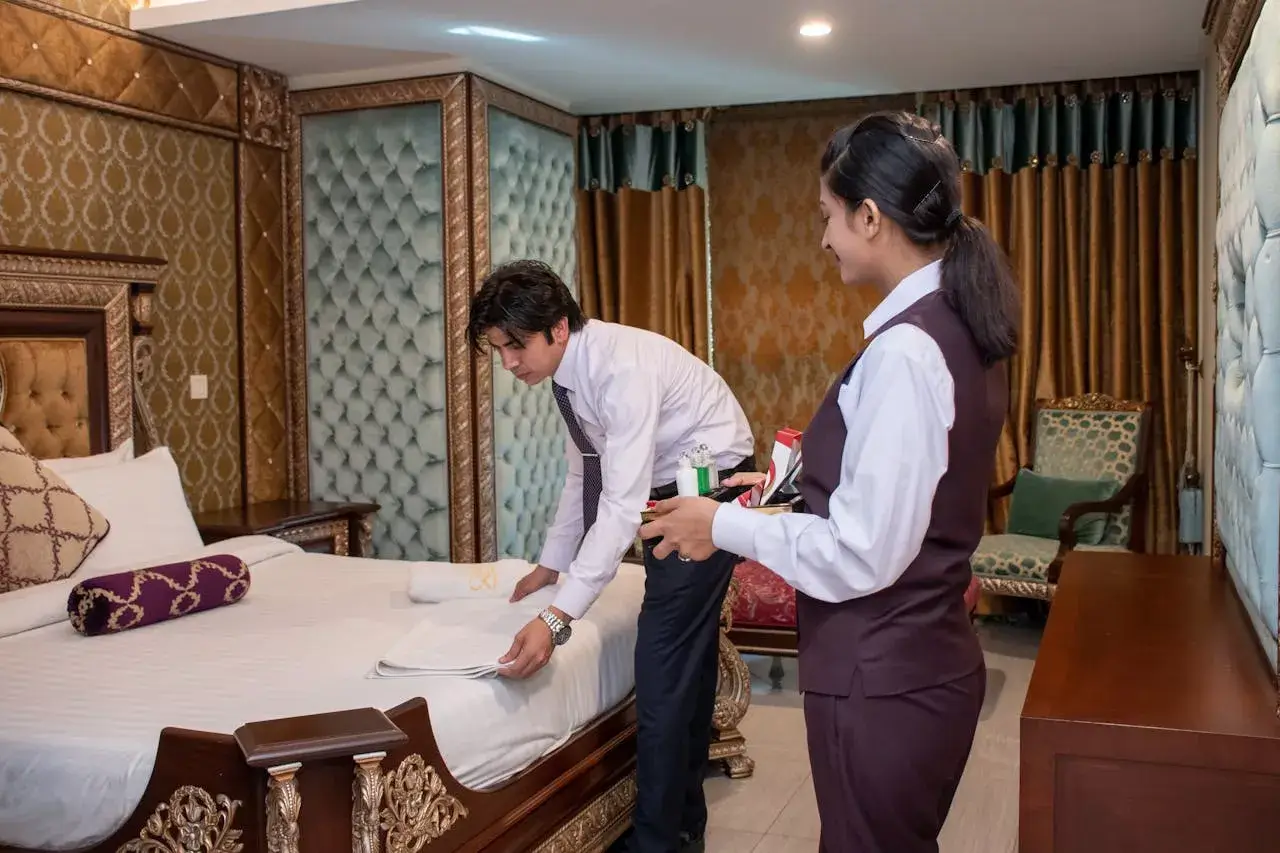
The most successful hotels in the sector are those that connect with the guest on every day of the stay. Housekeeping staff offering service suited to the guest’s expectations when entering the room, restaurant staff remembering guests’ food preferences, reception knowing the guest’s name—these details strengthen the guest’s feeling that “I am valued here” and ensure that expectations align with reality.
Exceeding Expectations and Memorability
The ultimate aim of correct expectation management is, in fact, not just to meet the expectation but—whenever possible—to exceed it. But this must be done very carefully. If a guest who comes to the hotel expecting “standard service” is met with an unexpected kindness—for example, if the housekeeping team leaves a surprise chocolate—this guest won’t forget it and will definitely tell others.
That said, it is worth being careful when trying to exceed expectations. If a cheap hotel tries to deliver service at five-star standards, it may create an expectation against pricier hotels, and the customer may think this will continue on future visits. Instead, it is more sensible to focus on delivering the best service in your own category and to do so consistently.
Over more than twenty years of consulting for hotels, the most memorable experiences have always stemmed from consistency and sincerity. At a budget hotel, so long as the employees are sincere and helpful, the guest experience is positive. Conversely, when an expensive hotel delivers cold, indifferent service, the same expectation may not be met.
Managing Difficult Situations
Life is not perfect, and at hotels things do not always go as planned. The air conditioning may break down, there may be a water outage, staff may be unable to come in due to illness. In such situations, the most important role of expectation management emerges. When there is a problem, it is very critical to communicate it proactively—before the guest discovers it.
For example, if construction is going to begin in the hotel lobby, it should be mentioned during reservation or, at the latest, explained at check-in. When a guest discovers it by chance, they experience a loss of trust. But if the problem is communicated in advance and a solution is offered—such as the guest getting a quieter room at the back of the hotel—the situation becomes tolerable.
In addition, if a problem does occur, the solution offered to fix it should be at the level of the guest’s expectations, or even higher. If a guest is in a room where the air conditioning has broken, moving them to another room, covering the cost of the move, and adding a kindness not only solves the problem but also turns the experience the guest remembers into a positive one.
Conclusion: The Road to Success
In light of my 30 years of experience, I can say that managing guest expectations correctly is the most critical skill in hotel management. The basic principles for doing so are simple: be honest, communicate in advance, be consistent, and think from the guest’s perspective.
Expectation management is not the responsibility of a single department; reception, housekeeping, the kitchen, management—everyone must be part of this philosophy. At Okay Supports, when we train hotels in this direction, we always emphasize this holistic approach.
If you, too, want to manage guest expectations more effectively at your hotels, increase your teams’ competence in this area, or improve your operational standards, we are by your side. Remember: a satisfied guest not only has a good experience; they also become your hotels’ best representative.