
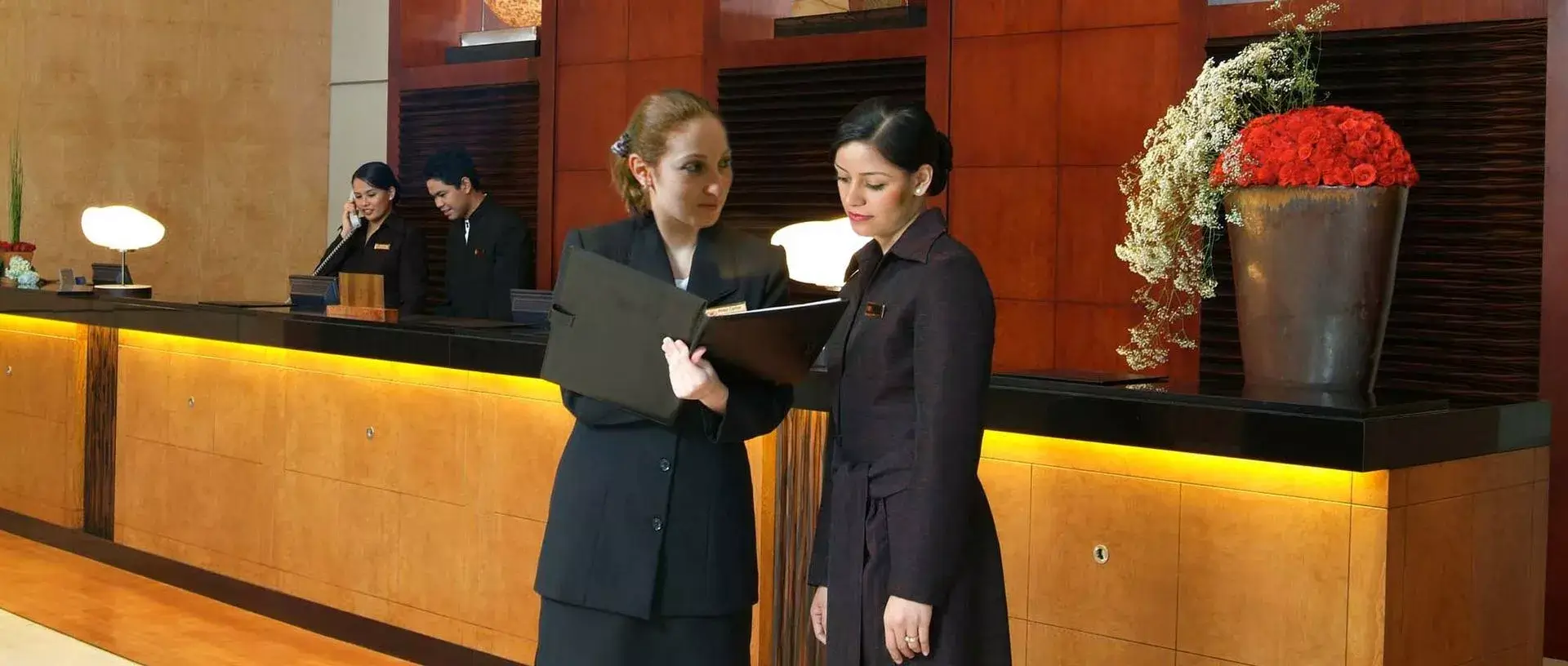
The shift handover is a moment often overlooked in a hotel’s daily operations but is actually very critical. Especially at the front office, since it’s the guests’ first point of contact, the quality of the handover there determines the success of the entire day. When we examined the problems experienced at many hotels in past years, we saw that most of them had an incomplete or disorganized shift handover at their root. If a receptionist hasn’t received critical information from the previous shift, many problems can arise—from giving guests the wrong room number to offering VIP guests standard service.
A bad handover is not just a shift problem; every negative experience during that day lowers guest satisfaction and damages the hotel’s image. In this article, drawing on practical experience, I want to share how the front-office shift handover should be done in a systematic and effective way.
Understanding the Purpose of the Handover
The shift handover is not just “leaving one shift to another.” It is, in fact, the process of transferring information, transferring responsibility, and ensuring service continuity. The incoming shift needs to know what happened during the previous shift, which guests have special requests, which rooms had problems, and what has been completed and what hasn’t operationally.
To give an example: on the previous shift, a guest in room 305 who complained about the air-conditioning malfunction was moved to another room. If the incoming shift worker didn’t receive this information, and that guest comes to reception and asks about the situation, the worker—knowing nothing—will disappoint the guest for a second time. This is exactly where the importance of the handover emerges. An effective handover is an information bridge between an experienced worker and a new worker.
What Should Be Prepared Before the Handover
A quality handover starts at the preparation stage. As the end of the shift approaches, the responsible worker should finish all open tasks and update the system.
The first important step for this is to complete the notes in the reservation system. All the special requests you took during the day, customer requests, room changes, and payment issues—everything must be updated in the system. Because the incoming shift staff will first check the system. If there’s missing information in the system, there are important points that can be skipped even in the verbal handover.
Second, the physical order of the front-office area should be kept tidy. Devices should be checked, printers should be in working order, and necessary forms should be ready. Nothing should be left half-finished, and all cash transactions should be completed. The incoming worker should start at a clean desk.
Third, the hotel’s event calendar should be reviewed. Is there a special event that day? Is there a group reservation? Will unexpected guests arrive? All this information should be conveyed during the handover.
How to Do an Effective Handover
When doing the handover, rather than talking randomly, you need to follow a systematic order. An ideal handover usually takes between 15 and 20 minutes; if it goes beyond that, it means unnecessary details have been included.
To begin, a general summary of the day is given. How many guests were there today? What was the occupancy rate? Were there any unexpected situations? Then, special notes are conveyed. VIP guests, guests noted by management, and guests with special requests are mentioned one by one. For example: “In room 207 there’s Ms. Sahin, she asked for no noise at all, and said she’ll set an alarm for 6 a.m.”
After that, technical and operational problems are discussed. Malfunctioning rooms, cleaning issues, maintenance requests. Handovers like “They asked for towels in room 405, we left them but there was no response, check on the next shift” are made at this stage.
Finally, current situations and expectations are written down. Guests expected to arrive during the day, problems that may occur. For example, some activities being cancelled due to bad weather, and how to communicate this with guests, are among the topics assessed.
Technology and Written Records
In modern hotels, a verbal handover alone is not enough. A written record is very important. Most hotel management systems (PMS) have a “Handover Form” or “Shift Notes” section. The outgoing shift should write the important points in this area; the incoming shift should read it as soon as they open the system.
This written record is a reference point not only for the incoming shift but also for the shift supervisor or manager. If guests have a complaint or a problem arises, they can understand what happened and produce a solution by checking the handover notes. It is also important legally; hotel businesses may need documentation of the problems experienced.
But technology can never replace the human element. Even at hotels with the best systems, a face-to-face handover is done. Because there are important things that need to be understood from the worker’s tone and emphasis, not just from written notes. How angry a guest is cannot be adequately conveyed in writing in the system.
Common Mistakes in the Handover and Their Solutions
In practice, there are common mistakes. The first is a long handover that runs over time and goes into every detail. This keeps the incoming shift from getting to its actual work. The solution is to sort the handover into categories: Critical (needs to know immediately), Important (needs to know during the day), and Reference (can keep in the background). Only the critical and important items should be conveyed verbally; reference notes should stay in the system.
The second common mistake is not giving the new worker any opportunity to ask questions during the handover. The incoming worker must be able to ask about things they don’t understand. Questions like “What kind of problem did this guest have?” and “Is this hotel policy?” should be answered. Otherwise, a shift that starts with incomplete information may make wrong decisions.
The third mistake is forgetting the emotional transfer. If the previous shift was very busy and stressful, acknowledging this and conveying the message to the incoming shift—”today was a tough day, let’s work together”—is important. This is what directly affects morale and teamwork.
Building a Handover Culture
An effective handover should be not a standalone procedure but part of the hotel culture. It must be supported by management. In an environment where the handover isn’t taken seriously, employees won’t take it seriously either.
Hotels with good practices hold accountable those who don’t do the handover (or do it incompletely). Likewise, they recognize and appreciate workers who do good handovers. Training programs address this topic, and this procedure is explained in detail when new workers are trained.
Also, handover quality is audited regularly. The manager is present from time to time during the handover and observes how it’s done. This ensures that workers take the process seriously.
Conclusion: A Small Detail, a Big Difference
The front-office shift handover may look at first glance like “just talking among themselves,” but it is actually like the backbone of hotel operations. A good handover increases guest satisfaction, strengthens operational efficiency, and deepens communication within the team.
In short, for an effective handover, remember these: start by updating the system, keep written records, make the verbal transfer systematic, give the incoming worker the opportunity to ask questions, and, as management, support and audit this process. These simple steps will create an extraordinarily positive effect in the hotel’s daily operations.
If you want to improve your hotel team’s shift-handover procedures, receiving structured training on this can make a big difference. At Okay Supports, we offer consulting and training services in exactly this area—learning directly from experienced professionals is always more effective than theoretical knowledge.