
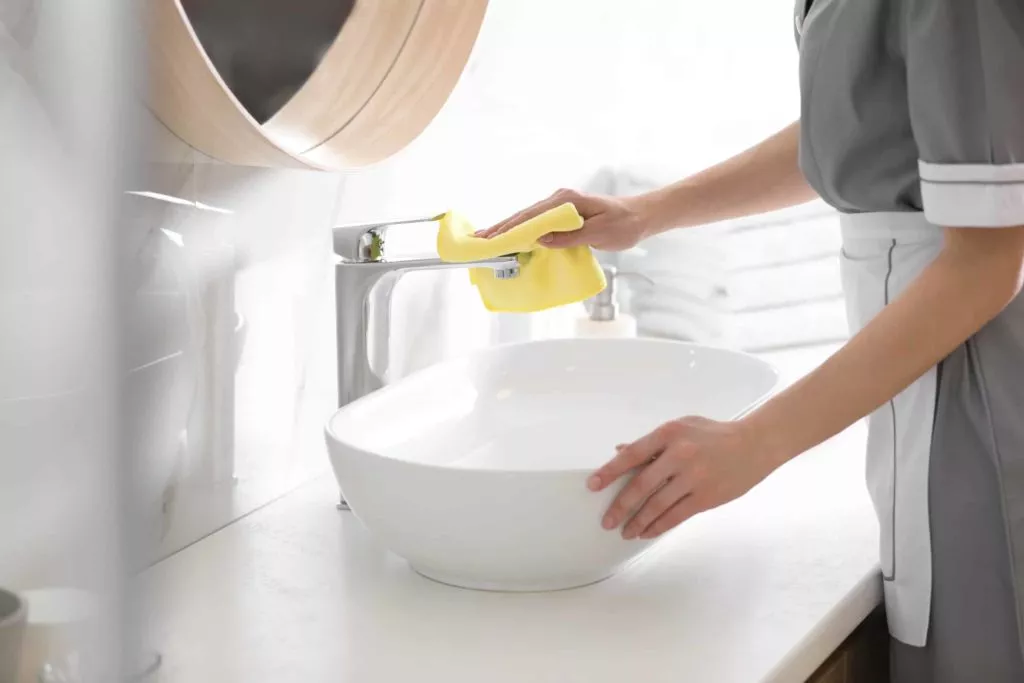
In the hospitality sector, bathroom cleaning, though often not in the spotlight, is a critical service area that directly affects guests’ level of satisfaction. When a guest enters the room, one of the first places they notice is the bathroom, and when they leave, the details they remember are mostly found in this space. In the trainings I’ve given at hotels recently, I’ve noticed that small differences in bathroom cleaning create big differences in guest-satisfaction scores. Offering five-star service requires managing this area properly.
Five-Star Details in Bathroom Cleaning
Establishing Cleaning Standards: The Starting Point
Success in bathroom cleaning begins with clear, written standards. At many hotels, this area remains vague and each employee acts according to their own understanding. This leads to inconsistency, difficulty in oversight, and problems especially with seasonal workers. First, a clearly defined cleaning procedure is necessary. Within this procedure, there should be specific steps for the sink, toilet, bathtub, shower cabin, floor, ceiling, and mirrors.
For example, cleaning a toilet is not done just by saying “clean it.” You need to start from the outer surface of the bowl, then the seat and lid, then clean the inside in a specific order, and finally check the entire area down to the floor. At professional hotels, these procedures are prepared as checklists, and employees work by following this list. That way, no detail is missed.
Correct Choice and Use of Chemical Products
The choice of chemical products used in bathroom cleaning directly affects the quality of the result and employees’ health. There are various products on the market, but not every product is suitable for every surface. Granite, marble, ceramic, and stainless-steel surfaces require different products.
Acidic cleaners can erode the grout layer, while alkaline products can leave polished surfaces matte. A quality hotel determines the appropriate product for each material type in its bathrooms and trains its teams on this. Also, employee safety cannot be ignored. Appropriate ventilation, gloves, goggles, and, when necessary, mask use should become standard. It’s quite important for employees to read the labels of these products and understand the safety data sheets.
In my personal experience, employees being knowledgeable about the product both increases work efficiency and raises quality. A conscious team avoids spilling products or wasting materials.
Time Management and Operational Efficiency
A five-star bathroom is not a bathroom cleaned in a hurry. But this doesn’t mean that setting aside time is unlimited either. In professional hospitality, the aim is to deliver maximum quality within a specific time. Usually, a standard hotel room’s bathroom can be cleaned in 12–15 minutes within the given methods. This is possible only with employee training and appropriate equipment.
The secret of time management lies in optimizing the sequence of movement. When the employee enters the bathroom, they must know which surfaces to clean in which order. For example, starting from the highest points and going down (ceiling → walls → floor) is physically efficient and prevents cross-contamination. Similarly, starting the work with wet products and finishing with drying operations speeds up the workflow.
According to the practice I’ve seen at many hotels, when two teams clean two bathrooms at the same time (one starting the drying work while the other moves to the next room), I’ve observed that efficiency increases significantly. What truly matters here is not compromising on cleaning quality.
Oversight Mechanisms and Quality Control
After establishing cleaning standards and training the team, it’s necessary to set up a quality-control system. This system should include regular, periodic checks as much as random checks. The housekeeping manager or responsible person should check the bathrooms in a certain number of rooms each day and record their findings.
The points that need attention during inspection are quite specific. Has the underside of the toilet ring been cleaned? Is the mirror foggy? Are the corners of the floor dry? Is there a chemical smell over the trash bin? Are the hand towels in the right number and hung at the right height? Is the soap dispenser full? Have the toilet paper ends been forgotten?
These checks should be done not to make employees reluctant, but to motivate them and let them see their successes. If the control system has a punitive tone, it has a negative effect on team morale. Instead, regular positive feedback, rewarding successes, and constructively pointing out areas for development are far more effective.
Special Situations and Challenging Conditions
Not all bathrooms are standard. Bathrooms with accessibility features for guests with disabilities require special attention. Child-friendly bathrooms, with their set arrangements, demand more careful cleaning. For elderly guests, providing non-slip surfaces helps reduce the risk of falls. Such special situations should be specified in the general procedures.
Also, cleaning a bathroom that has seen heavy use by the guest is different from normal situations. In cases like bad odor, staining, or mold, a deeper intervention than ordinary cleaning must be made. Employees should feel comfortable reporting such situations to their managers, and managers should take the necessary action quickly.
There are seasonal challenges too. In high-humidity regions, during periods of roof leaks, or in cold-weather conditions, cleaning and drying procedures may need to be adjusted. While quick-drying products are preferred in the high heat of summer, heavier cleaners may be needed in winter.
Conclusion: Small Details, Big Difference
Five-star service in bathroom cleaning is not just a cleaning job. It is the combination of setting up a system, team training, quality control, and continuous improvement. In hotel management, successful brands show extraordinary detail in seemingly ordinary areas like bathrooms. These details directly affect customer satisfaction and hotel ratings.
If hotel management sees this area as a place where costs should be cut, it needs to be reassessed. On the contrary, seeing the bathroom as the heart of the guest experience and allocating appropriate resources, time, and attention to this area will prove far more profitable in terms of long-term customer loyalty and positive reviews. Starting today, review your bathroom-cleaning standards, strengthen your team, and see the difference.