
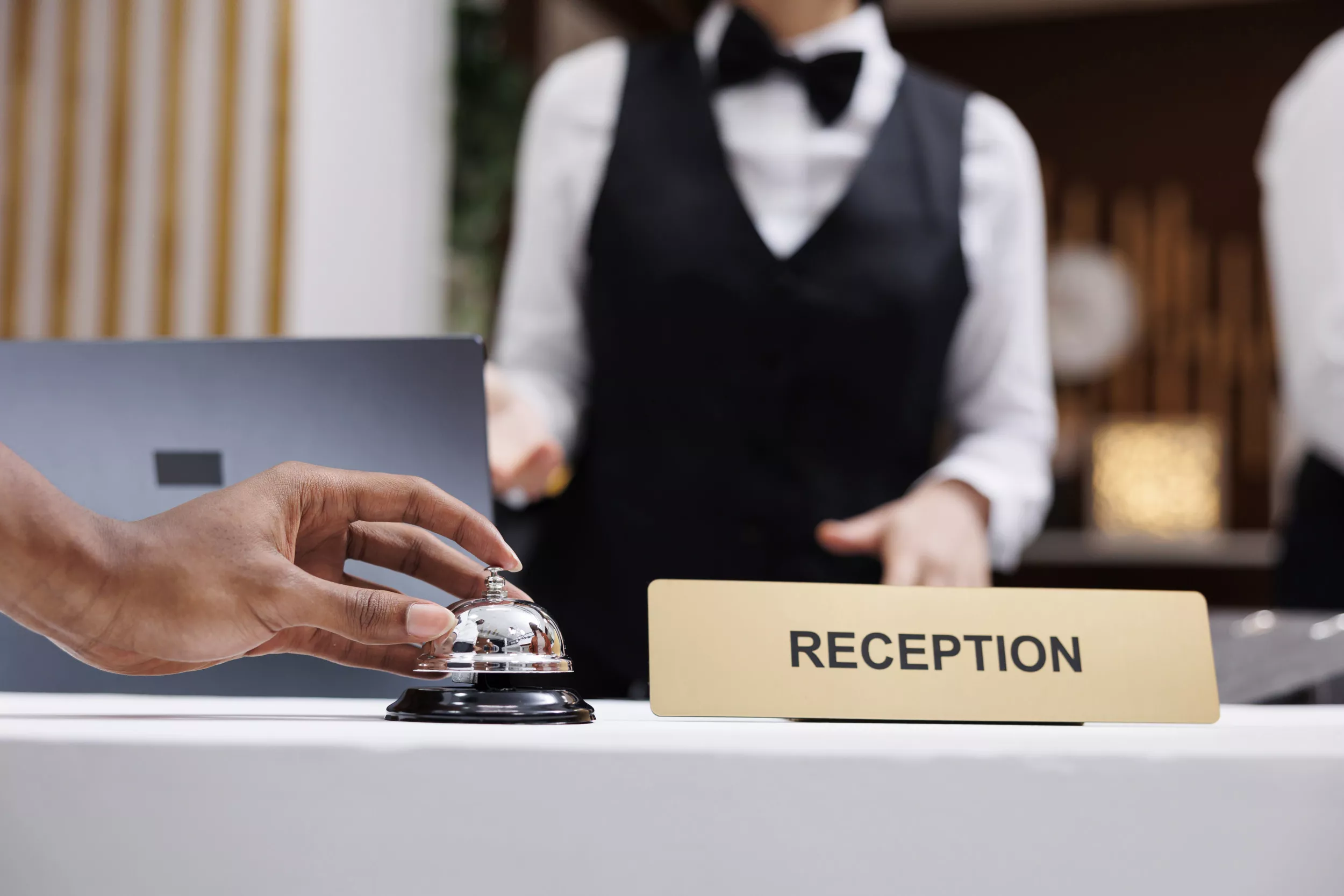
A hotel’s first impression forms at reception. From the moment the guest walks through the door, the receptionist they encounter represents the hotel’s entire identity. For this reason, the skills a reception team must have are not limited to technical knowledge alone. Through my observations, I have realized that successful receptionists carry a far more comprehensive set of competencies. Whether it’s a luxury hotel or a boutique property, the quality of reception directly affects the success of the whole hotel.
So, which skills are necessary for a receptionist to grow professionally and keep guest satisfaction at the highest level? In this article, we’ll examine 12 core skills proven within the sector and explain why each one matters.
1. Flawless Communication Skills
For a receptionist, communication is not just about speaking. An effective receptionist knows how to listen to guests, understand their needs, and give the right answers on time. Speaking in a lively, dynamic tone of voice on the phone, making eye contact in face-to-face conversations, and having coordinated body language determine the success of communication.
Especially when explaining complex situations, the receptionist should be clear, understandable, and reassuring. When discussing guest problems, they should offer not only the problem but also a solution. For example, instead of saying “Unfortunately there are no rooms on that date,” an approach like “Although we’re full on that date, would a stay one day earlier or later be possible? Otherwise, I can recommend a partner hotel of ours in the city center” increases customer satisfaction.
2. Sales and Upselling Ability
Receptionists are more than just room-assigning staff—they are sales representatives. Being able to present the hotel’s additional services (spa, restaurant, transfer service) in a natural and convincing way is an important part of increasing the business’s revenue.
For this to succeed, you need to quickly assess the guest’s profile. It makes sense to highlight the business-center service for a customer on a business trip. Introducing a vacationing family to the spa or kids’ club enriches their experience. Such recommendations, when they add value for the customer and don’t create unnecessary pressure, increase both satisfaction and revenue.
3. Technical Knowledge and Mastery of the Hotel System
Knowing the property management system (PMS) at an excellent level is a requirement for today’s digital hotels. You need to be able to instantly access and use a great deal of information such as the reservation system, pricing, room availability, guest history, and security protocols.
In addition, basic troubleshooting ability is valuable. When system problems occur, checking the system, trying another terminal, or contacting the technical team rather than panicking is a sign of professionalism. And in situations where the system falls short, knowing manual transaction procedures prevents guest service from being interrupted.
4. Multilingual Competence
At tourism destinations and international hotels, a receptionist is expected to know at least two, and preferably three, languages. English is now a basic requirement, but additional languages like German, Russian, Chinese, or Arabic directly affect one’s career.
Knowing a language is not just about vocabulary. Cultural awareness—understanding the needs and expectations of guests from different nations—is also part of language competence. A Japanese guest wants courtesy and detailed information. An Arab guest may prefer suitable payment terms and family rooms. Knowing and applying such nuances turns multilingual competence into a genuine skill.
5. Problem-Solving and Conflict Management
Reception is, inevitably, the first point where problems and complaints emerge. Apart from the hotel’s employees, no one interacts with a receptionist as frequently and in as many different contexts as guests do. Therefore, solving every kind of problem in a calm, constructive, and effective way is an indispensable competence.
When a guest complains about room cleanliness, the receptionist doesn’t just inform housekeeping. They also listen to the guest, apologize, explain how quickly the problem will be solved, and follow up on the action taken. In such situations, understanding the cause of the guest’s anger, offering an early and clear solution, and, if necessary, offering compensation options (a room change, an extra service, and so on) turns a crisis into an opportunity.
6. Time Management and Multitasking
Reception is a busy and complex environment, especially at check-in and check-out times. Tasks like answering the phone, greeting a new guest, answering questions from existing guests, checking emails, and calling a taxi can pile up all at once.
Successful receptionists set priorities amid this chaos. A guest standing right in front of them comes before the person on the phone. An urgent request (like calling a doctor) is taken ahead of all other tasks. Routine tasks (answering emails) are saved for quieter hours. This kind of time management preserves the quality of all tasks.
7. Culture and Courtesy
The essence of hotel service is respect and courtesy. A receptionist must show all guests an equal level of attention and respect and must never behave judgmentally or with prejudice. Regardless of a guest’s appearance, language, or behavior, they must be met with the highest professional standard.
Also, as a representative of the hotel’s internal culture, they communicate appropriately with other departments as well. They work with housekeeping, the kitchen, security, and management in a constructive, respectful manner. Internal harmony directly affects the quality of external service.
8. Attention to Detail
This skill, especially important at luxury hotels, is actually valuable at hotels in all categories. Pronouncing a guest’s name correctly, remembering their previous visit, knowing their preferred payment method, or noting a detail in their room—all of these show personalization and care.
For example, when you encounter a frequent guest, not just saying welcome but saying, “Mr. Johnson, greetings. I hope we’ve reserved your favorite room class—this time on a higher floor, because we remembered you wanted a city view” makes the difference. Attention to detail is shown not just through systems or procedures, but through genuine interest.
9. Empathetic Listening and Emotional Intelligence
Guests sometimes carry not a technical problem but an emotional need. It is natural to feel tired, stressed, or lonely after a long journey. If a receptionist can perceive such emotional states and respond appropriately, they build a much deeper connection.
For this, you need not to listen passively but to participate actively. As a guest tells a story, listening without interrupting, approaching with interest, and saying “I understand” at the right moments makes the person feel important. This kind of approach can turn even complaints into a positive experience.
10. Flexibility and Adaptability
The tourism sector is full of unpredictable situations. Sudden weather conditions, unexpected arrivals, system failures, or guest requests can cause plan changes. Successful receptionists don’t feel stressed by such situations; on the contrary, they find creative solutions.
The hotel is fully booked, but a guest wants an extra room? Alternative hotel recommendations and transfer service are ready. The expected guest was delayed and the room was given to someone else? When the guest arrives, they are met with a better room, a welcome gift, or an inviting ambiance. Flexibility is the key word of customer satisfaction.
11. Business Etiquette and Professional Appearance
The receptionist is the face of the hotel. Their clothing, grooming, hair, shoes, and even their tidiness reflect the hotel’s reputation. At a luxury hotel, the receptionist should look flawless and elegant. At a boutique hotel, style and personality come to the fore. In every case, being clean, orderly, and in line with the hotel’s standards is essential.
Beyond physical appearance, time management and reliability are also part of work ethic. Being ready at the start of business hours, returning on time from lunch breaks, and completing all tasks responsibly are signs of professionalism.
12. Lifelong Learning and Adaptability
The hospitality sector changes rapidly. New technologies, new guest expectations, new marketing methods—many innovations emerge every year. Successful receptionists are open to these changes and eager to learn.
Adapting to a new PMS system, staying current with social-media trends, or learning new methods in customer service—all of these determine the long-term success of a career. A receptionist’s desire to develop raises not only their own success but the entire hotel’s quality standards.
Conclusion: Integrated Competence
These 12 skills work not in isolation but as a whole. Without technical knowledge, even good communication is insufficient. Without empathetic listening, problem-solving falls short. Without language competence, serving multicultural guests becomes impossible.
A receptionist’s development is directly proportional to the hotel’s development. If you are a hotel manager, strengthen your team’s skills through regular training. If you work as a receptionist, invest in developing yourself in these 12 areas for career advancement and professional fulfillment. In the tourism sector, quality reception service always creates a competitive advantage.