
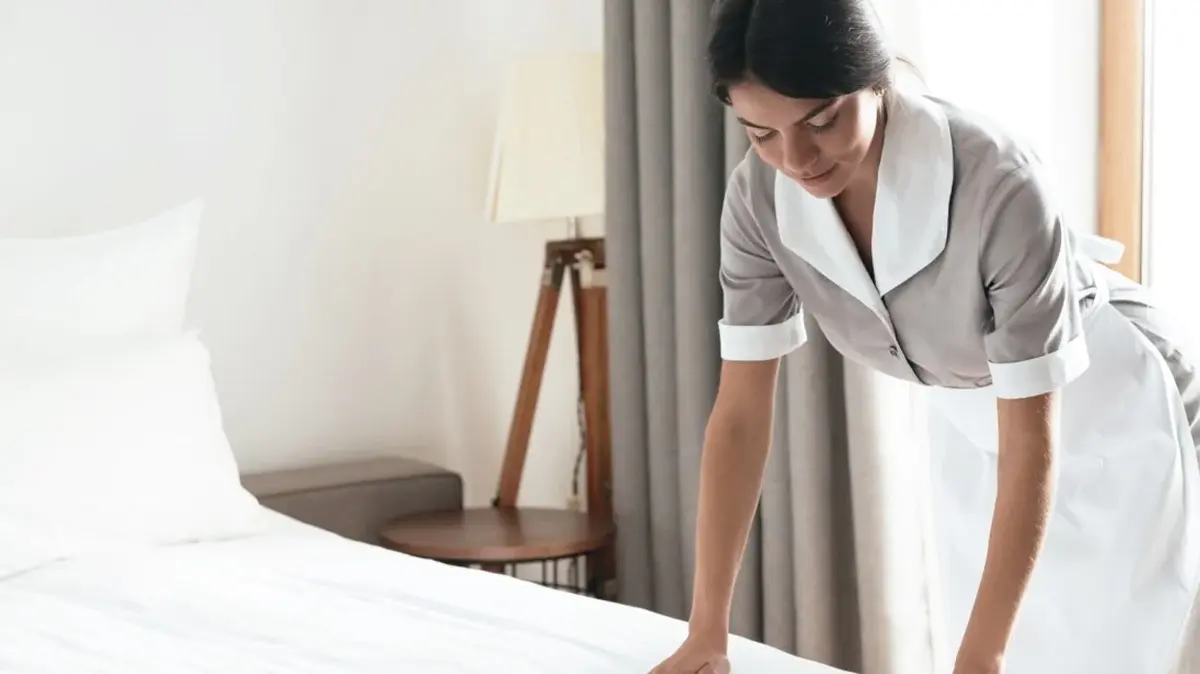
Housekeeping is the area where a hotel’s quality is directly seen and felt. From the first moment guests enter their rooms, they are met with an expectation of cleanliness, order, and professionalism. But in today’s fast-paced tourism environment, increasing housekeeping staff’s efficiency while not compromising on service quality is a real challenge every hotel manager faces.
The most important point I’ve seen while working with many hotels in recent years is this: efficiency and quality are not opposites. On the contrary, when the right systems and practices are put in place, both improve at the same time. In this article, I’ll share ten important practices that increase efficiency in housekeeping and can be applied in practice.
1. Smart Room-Cleaning Planning and Route Optimization
At most hotels, floor-cleaning routes are built on habit and tradition. Yet each floor, each section, has its own characteristics. Optimal route planning prevents staff from wandering the corridors unnecessarily and minimizes time loss.
By analyzing the floor plan, it’s important to create a system in which staff can clean the most rooms with the least walking distance. At the same time, optimizing elevator use and moving cleaning tools and supplies in the most efficient way also directly affect efficiency. Some hotels can dynamically change these routes using software solutions, providing flexibility according to floor status.
2. Clarity in Job Definition and Standard Procedures
What does it mean for a room-cleaning task to be finished? Most of the time seeing the room look clean, or cleaning it to specific standards? This distinction is very important. Written and understandable cleaning standards reduce variation among staff, minimize errors, and—most importantly—make the average time of each cleaning predictable.
At the hotels we work with at Okay Supports, we prepared checklists for each room category (for example, standard room, deluxe room, suite, and so on). These lists determine what work will be done, in what order, and how long it should take. As a result, new employees learn quickly, and experienced staff’s performance stays consistent.
3. Technology Integration: Mobile Apps and Feedback Systems
In the digital age, still managing housekeeping on paper is one of the main causes of time loss. Through mobile apps, staff instantly know which rooms are to be cleaned, mark the app when cleaning is done, and immediately report any problem or shortcoming.
Such systems can be a source of motivation not just for management but for staff too. When it can be seen how many minutes a task took and how efficiently the work was done, competition and the desire for self-improvement naturally emerge. Also, guest complaints or room problems can be reported in real time, speeding up the resolution process.
4. Distributing Staff According to a Workload System
Working with the same number of staff every day is one of the most common mistakes. Weekday and weekend workloads, and hotel occupancy rates according to seasonal changes, are different every day. A dynamic staff-distribution system is critical for finishing the work on time and protecting staff from exhaustion.
At some hotels, on Thursday a double floor cleaning is done (both daily room cleaning and comprehensive cleaning), while on Tuesday a single person on duty may be enough. Analyzing this scenario in advance and adjusting the number of staff significantly reduces rushed-cleaning errors and quality decline.
5. Training in the Correct Tools, Supplies, and Chemical Use
One of the most overlooked aspects of increasing efficiency in housekeeping is training. Do staff know which cleaning product to use, on which surface, and at what concentration? Can they use the tools correctly? Or, more importantly, do they use these tools in the shortest time and most effective way?
Short but effective training on topics like the use of microfiber cloths, optimizing the cleaning order, and correctly mixing chemical products can increase staff working speed by 20% to 30%. At the same time, since product waste decreases, costs also fall.
6. Teamwork and Motivation Systems
Housekeeping is usually a department where people work alone. But a model that succeeds at some hotels is having two people work together on certain days or certain tasks. This not only speeds up the work; it is also good for camaraderie among staff, knowledge sharing, and safety.
From a motivation standpoint, having small incentives for the most efficient staff member or the person or team that provides the best cleaning quality, monthly or weekly, encourages employees to make more effort. This should be done with transparent criteria and fair evaluations so that a healthy competitive environment forms.
7. Regular Application of Quality-Control Systems
An increase in efficiency should not bring a decline in quality. For this, regular and systematic quality checks are necessary. Every day, at different times, checking specific rooms, keeping these checks in writing, and giving staff feedback is the mechanism that ensures efficiency stays high-quality.
This should not be confused with managers checking every room cleaning. On the contrary, it’s enough to check a random sample of rooms to the same standards each day. If five rooms are checked three days a week and these checks are done to strict criteria, staff will try to clean those five rooms perfectly every time, and this discipline will over time carry over into all their work.
8. Energy and Air-Quality Optimization
The floor staff’s working environment directly affects their efficiency. Staff working in a stuffy, hot, damp room cannot work at the same speed. Ventilation systems working properly, good air quality, and controlled temperature are essential not just for guest satisfaction but for staff efficiency.
Also, the quality of lighting in housekeeping is an overlooked factor. Light of the correct color temperature and sufficient intensity reduces staff cleaning errors and enables them to do the same work in a shorter time.
9. Staff Rotation and Variety
Staff who have worked on the same floors for a long time fall into a routine, and efficiency declines. Assigning staff to different floors at certain intervals, or rotating between tasks, can provide both physical and mental refreshment. This encourages staff to get to know different spaces, see different methods, and learn.
At the same time, it is important for controlling staff turnover. Housekeeping workers staying at the hotel for a long time directly increases their work experience and efficiency. For this, organizing working conditions, pay policy, and career opportunities are necessary investments.
10. A Culture of Innovation and Continuous Improvement
Finally—but no less important—a point: staff being able to offer their own ideas. People working in housekeeping deal with seventeen or eighteen rooms a day. They’ve seen different problems and different situations in every room. Getting answers from them to the question “How can we do this work faster?” is often more effective for increasing efficiency than orders coming from managers.
Regular meetings, suggestion boxes, and small rewards for staff suggestions, alongside increasing efficiency, also strengthen staff satisfaction and a sense of belonging to the work.
Conclusion: A Holistic Approach
Increasing efficiency in housekeeping is possible not with a single practice, but with these ten practices being used together in a coordinated way. Route planning, training, technology, motivation, quality control, work environment, staff management, and innovation need to be addressed as a whole.
The most important thing to remember at this point is that staff are not just a tool but a fundamental value. Listening to them, showing them respect, and providing the necessary support and training will automatically increase efficiency and quality. This approach, which we’ve seen succeed at the hotels we work with at Okay Supports, is applicable and effective at every hotel.
Now is the right time to reassess your housekeeping, determine which of these ten practices are missing at your hotel, and start applying them step by step. Remember that such changes don’t happen immediately, but if applied consistently, clear results can be seen within three to six months.